
Cold calling introduces your business to people who haven’t asked to hear from you. The challenge is turning an unexpected call into a useful discussion. That takes a suitable contact, a clear reason to call, and questions worth answering.
Research helps callers prepare. HubSpot surveyed 379 sales professionals in 2025. Among respondents who said cold calling was a major part of their daily work, 55% cited research and personalization among their most successful techniques. The finding reflects respondents’ own experience.
Below, we explain the process, B2B and B2C examples, benefits, and success rates. We also cover practical tips and how to decide between an internal team and outsourced support.
What Is Cold Calling?
Cold calling is an outbound sales method where a representative phones a potential customer who hasn’t requested contact or expressed interest in the offer. The caller introduces the business and checks whether further discussion would be useful.
It is one channel within the wider outbound sales process. A call could identify the right buyer, uncover a need, or lead to a meeting. Learning that the account is unsuitable is also a useful outcome. It saves your team from pursuing the wrong prospect.
Cold Calling vs. Warm Calling
A cold call starts without a prior expression of interest. A warm call follows an inquiry, a relevant introduction or an earlier conversation. Calling a manager from a researched prospect list is cold outreach. Returning that manager’s request for a quote is a warm call. Research improves preparation, but it doesn’t mean the person expects or wants a sales conversation.
Difference Between B2B vs. B2C Cold Calling
B2B cold calling reaches people who buy or influence purchases for a business. B2C cold calling reaches individual consumers. The person’s needs and buying process shape the conversation.
| Factor | B2B cold calling | B2C cold calling |
| Audience | Owners, managers, and other relevant employees | Individual consumers |
| Need discussed | A business problem or requirement | A personal or household need |
| What you check | Company fit, responsibility, current setup, and timing | Interest, service location, and suitability |
| Who decides | One person or several people across the business | The individual or household |
| Possible next step | A demo, discovery meeting, quote discussion, or site visit | A consultation, assessment, quote, or purchase where appropriate |
In a business purchase, the person using the service might not approve the contract. A facilities manager could assess cleaning providers while procurement manages the agreement. Ask how that process works before deciding who should attend a meeting.
B2B telemarketing also includes calls beyond first contact, such as following up on an inquiry. Cold calling describes the initial outreach to a prospect who hasn’t shown interest. For a broader explanation of telephone-based marketing, see our guide to what telemarketing is.
Cold Calling Examples
Cold calling examples show how a caller can turn an introduction into a question and a sensible next action.
B2B Example: Calling a Facilities Manager
A cleaning company calls a facilities manager responsible for three offices. The caller says, “Hi Alex, this is Jordan from [Company]. We provide office cleaning in Dallas. Do you have a moment for a question about your cleaning contract?” Alex says the contract ends next quarter. Jordan asks when the review begins and what the manager wants from a provider. They agree that Jordan will send service details and call back before the review. The caller records the timing and Alex’s priorities. A site assessment can follow if the service fits.
B2C Example: Calling a Homeowner
A heating company calls a homeowner after completing the required calling checks. The caller identifies the business and asks whether the homeowner is considering replacing an older heating system. The homeowner mentions frequent repairs but wants to understand the installation work. The caller confirms the service area and explains what an assessment covers. They arrange a visit only if the homeowner wants to proceed. The caller makes no promise about energy savings before assessing the system. Any request to stop further calls is recorded and acted on.
How Does B2B Cold Calling Work?
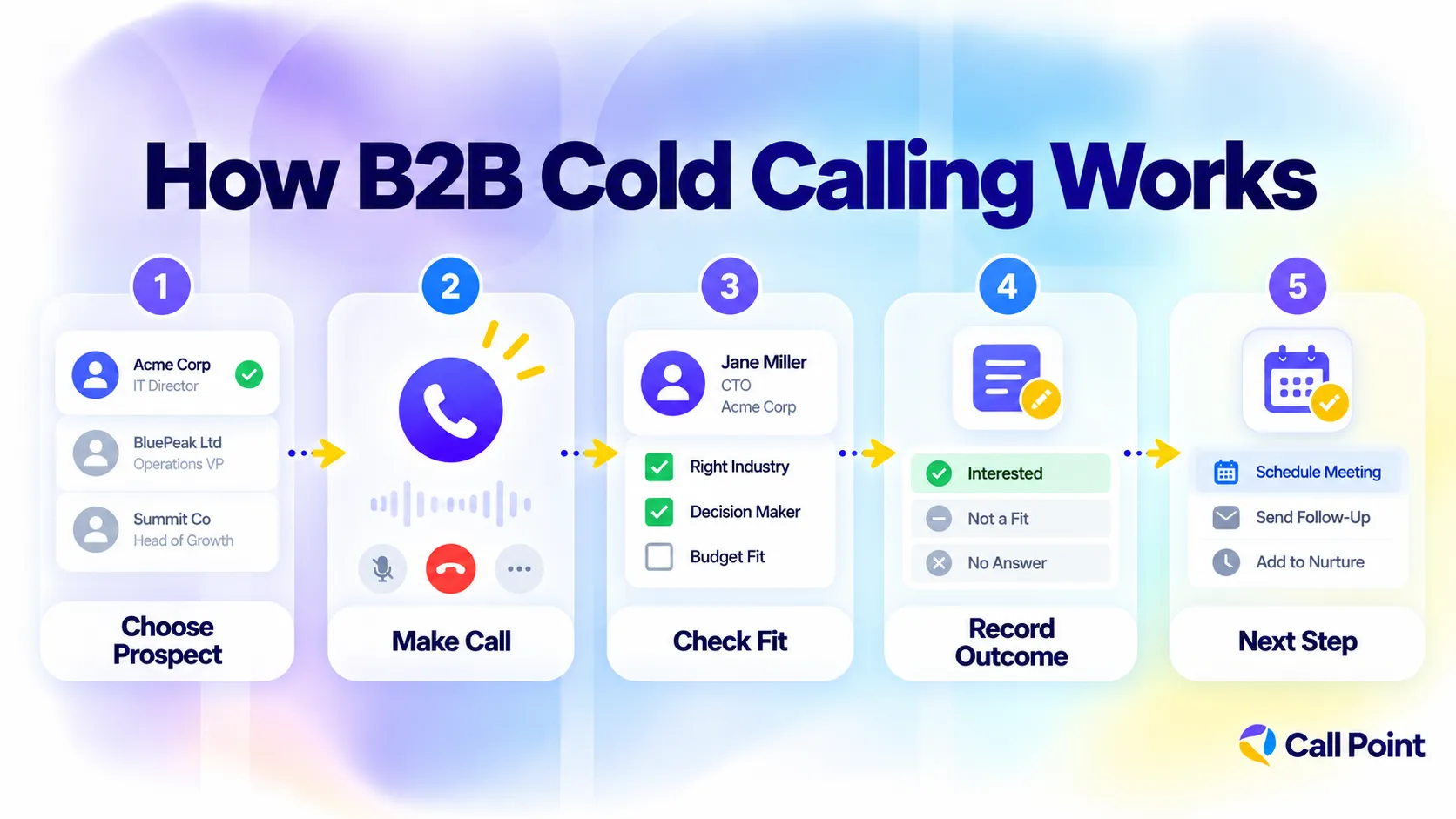
B2B cold calling has three stages: prepare the contact, discuss the need, and act on the outcome. A sales development representative, or SDR, often handles this work before passing an opportunity to a salesperson.
1. Before the Call: Choose the Right Prospect
Start with the kind of business you can serve. Define the industry, location, size, and need that make an account worth contacting. This is your ideal customer profile. Then find the role that handles the issue. A cleaning company could target facilities managers at offices within its service area. Check the contact details, local time, and calling restrictions. Review enough information to explain why you’re calling. Have a business phone system, approved talking points, and a way to record outcomes and follow-up tasks ready before the campaign starts.
2. During the Call: Establish Relevance and Fit
Give your name, company, and reason for calling. Then ask a question the prospect can answer from experience. “How do you handle cleaning across your different offices?” gives them room to explain. Listen to the answer before choosing your next question. If staffing gaps are the issue, ask when those gaps occur. If the company has no need for your service, end the call politely. When there is a reason to continue, explain what the next conversation would cover and ask whether it would help.
3. After the Call: Record and Assign the Next Step
Write down what happened in your customer relationship management system, or CRM. Record whether you reached the right person, what they said, and what you agreed to do. Add a follow-up date and name the person who owns the task. For a booked meeting, include the business need and the reason the prospect agreed to attend. The salesperson should be able to prepare from those notes. Mark wrong contacts and requests to stop calling so they aren’t put back into the same calling queue.
What Are the Benefits of Cold Calling?
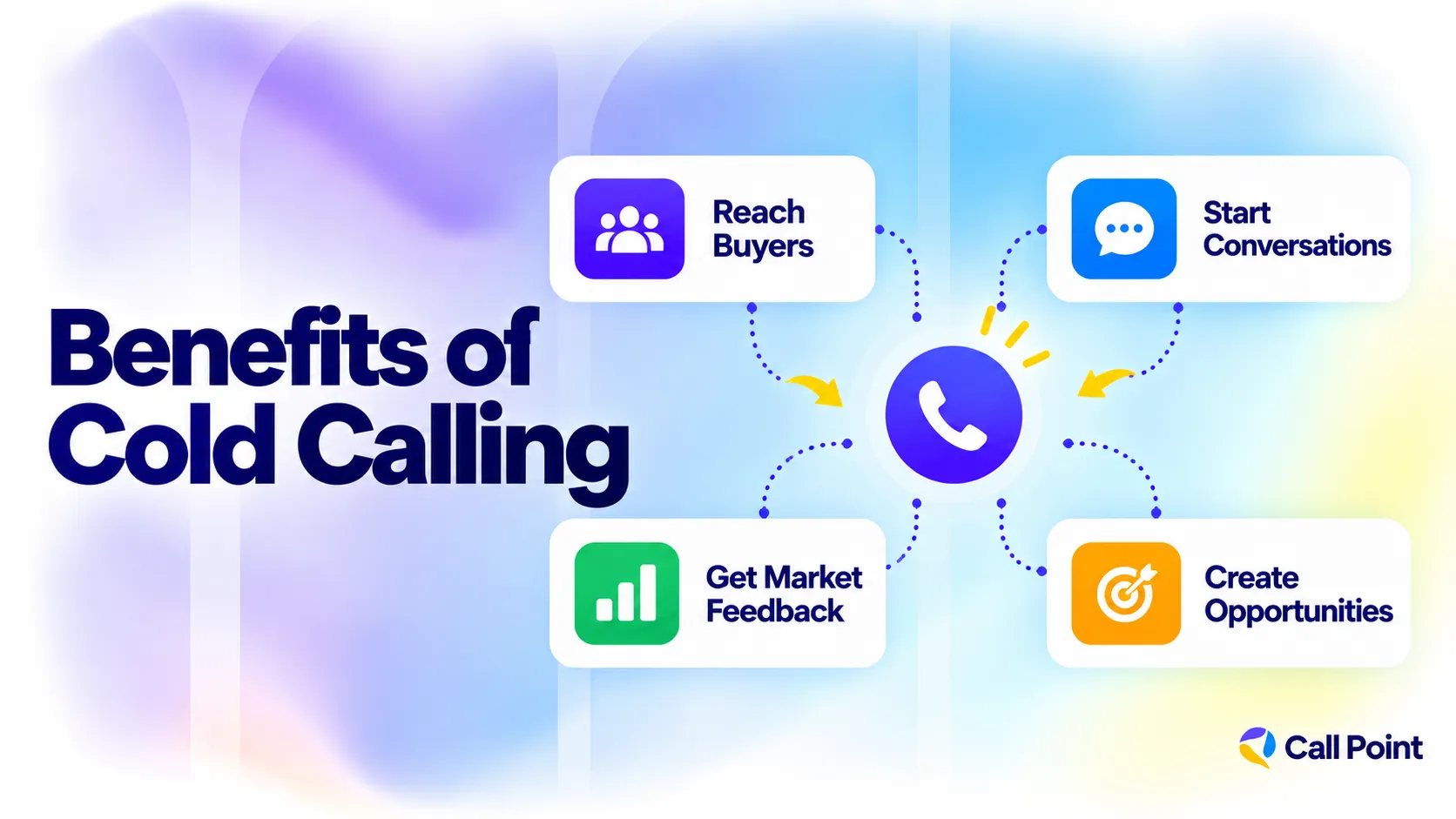
Cold calling helps you reach selected prospects, discuss their needs, and decide whether to continue the sales process. Its benefits depend on the offer, the contact list, and how the calls are handled.
- Reach buyers beyond incoming inquiries: You can contact accounts that fit your market before they find your website or request a quote. This adds another source of conversations alongside referrals and inbound leads.
- Check whether a need exists: Questions about the current setup and buying timeline help you assess the prospect. That makes cold calling useful for lead generation and qualification, as well as introductions.
- Answer questions during the discussion: A prospect can explain a concern, and you can clarify it before the call ends. Both sides learn whether a further conversation would help.
- Learn from buyer feedback: Repeated questions about price, service coverage, or switching providers can reveal gaps in your message. Treat those calls as directional feedback, rather than a survey of the whole market.
Cold calling also takes time and money. Include research, unanswered calls, training, technology, and follow-up when judging its value. A booked meeting alone doesn’t establish that the campaign is profitable.
Cold Calling Statistics and Success Rates
Cold calling statistics measure different outcomes, so check what each percentage represents. A connection rate tells you how often callers reach prospects. A meeting rate tells you what happens after a conversation.
Gong’s analysis of more than 300 million cold calls reported the following figures.
| Measure | Average reps | Top-quartile reps |
| Calls answered by a prospect ÷ total dials | 5.4% | 13.3% |
| Conversations leading to a booked meeting | 4.6% | 16.7% |
The gap is useful for understanding why teams should inspect both stages. A caller can struggle to reach people, struggle to book meetings after connecting, or face both problems. Each calls for a different review.
What Is a Good Cold Calling Success Rate?
A good success rate is one that produces enough qualified opportunities to justify the campaign’s full cost. There isn’t one percentage that answers that question for every business. Define success first: a connection, a booked meeting, a held meeting, or a sale. Then compare campaigns with similar audiences, offers, and follow-up periods. Consider deal value too. A campaign selling a high-value business service has different economics from one selling a low-priced product. Use published figures as context while building a benchmark from your own results.
How Do You Measure Cold Calling Results?
Track connections, bookings, attendance, meeting quality, and total cost. For example, 400 dials produce 40 prospect conversations and eight bookings. Six meetings take place, and five meet the qualification criteria. The connection rate is 10%, the conversation-to-booking rate is 20%, and attendance is 75%. Set the qualification criteria before calling starts, and separate meetings held from meetings that qualify. Include staffing, data, systems, and management in the cost calculation. Divide that total by qualified meetings held, then track which opportunities progress through sales.
B2B Cold Calling Tips
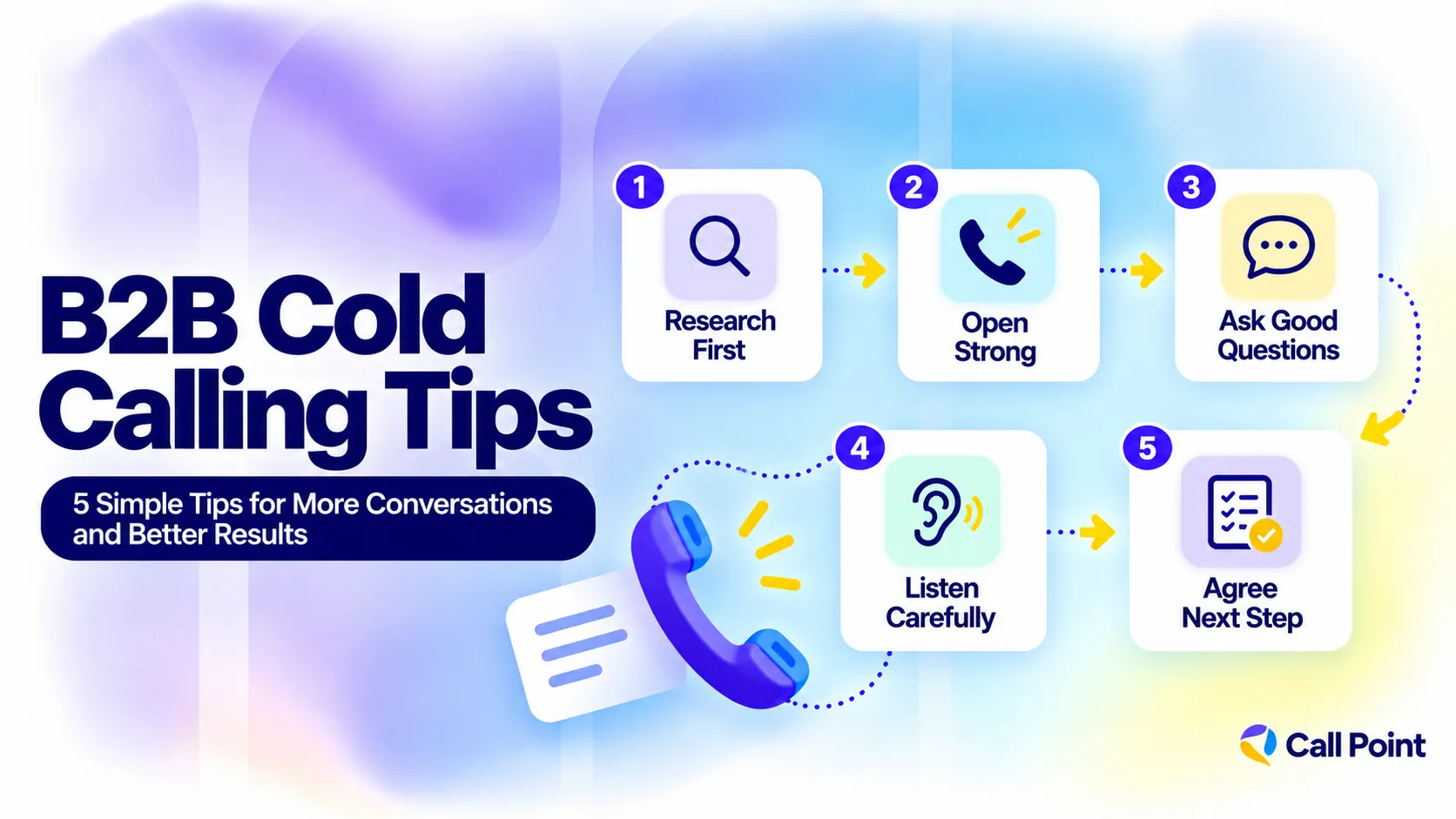
Make B2B calls more useful by preparing a clear opening and responding to what the prospect says. A script should help you hold the conversation without forcing every person through the same questions.
- Know why this account fits. Be able to connect the offer to the company and the person’s role. If you can’t, review the list before making more calls.
- Ask one question at a time. Start with the current arrangement. Follow the answer before moving to a new topic. Asking about budget, authority, and timing all at once can feel like an interview.
- Keep your claims accurate. Explain what you provide. Don’t invent savings, suggest a relationship that doesn’t exist, or claim to know problems the prospect hasn’t confirmed.
- Clarify objections without arguing. “We already have a provider” doesn’t mean the person wants to switch. If they’re willing to talk, ask when they review that arrangement. Respect a clear refusal.
- Give follow-up a purpose. If someone asks for information, check what would be useful. Send it and agree on whether another call makes sense. An email request isn’t automatically a meeting request.
Review the problems your records reveal. Wrong numbers need a data fix. Many unsuitable meetings suggest weak qualification. Change one part of the campaign at a time so you can see what helped.
In-House vs. Outsourced Cold Calling
In-house cold calling puts hiring and daily management with your business. Outsourcing assigns defined calling tasks to an external provider. Both need clear instructions and input from your sales team.
| Factor | In-house | Outsourced |
| Staffing | You recruit and onboard callers | The provider supplies the agreed team |
| Training | Your managers teach the offer and calling process | You supply offer knowledge; the provider trains callers on the campaign |
| Oversight | Your team handles schedules, reviews, and coaching | The agreement defines who manages each part of the work |
| Costs | Pay, benefits, recruitment, systems, and supervision | Service fees plus any agreed setup, data, or technology charges |
An internal team can suit steady calling work when you have managers who can coach it. Close access to product specialists can also help with a complex offer.
Outsourcing is worth considering when the audience and offer are clear but your team lacks capacity. You can split the work: an external team handles early outreach while internal salespeople manage discovery, proposals, and closing. Our in-house vs. outsourcing guide explains the wider cost and management considerations.
How Call Point Supports Cold Calling Campaigns
Call Point Business Solutions supports cold calling, lead qualification, appointment setting, and follow-up. Our outsourced telemarketing and telesales services help businesses add capacity for these tasks.
We review your offer, audience, campaign goals, and sales handoff before the calling work starts. Setup includes approved talking points, qualification rules, call outcomes, and follow-up actions. Callers receive training on the campaign and approved systems.
Call and task reviews, supervisor checks, performance tracking, and client feedback guide coaching and campaign reviews. Your sales team receives the context needed for the next conversation. Reports help identify where the work needs attention.
Speak with Call Point about the prospects you want to reach and the calling work you need help with. We can use those details to define the scope, responsibilities, and reporting.
Frequently Asked Questions
When Should Businesses Outsource Cold Calling?
Consider outsourcing when you know who to target and what to offer, but your team can’t keep up with prospecting. A new market, a shortage of callers, or too much early outreach on senior salespeople can prompt that decision. First define what makes a prospect suitable and who will follow up. An external team still needs those decisions from your business.
How Do You Choose a Cold Calling Provider?
Choose a provider with experience calling a similar audience and a clear approach to training, quality reviews, and reporting. Ask for a sample report and evidence behind performance claims. Confirm who supplies contacts, approves scripts, handles opt-outs, and receives opportunities. Review all fees, minimum commitments, and cancellation terms before signing.
Is Cold Calling Legal in the US?
Cold calling can be lawful in the US when the campaign follows applicable federal and state rules. The number called and technology used affect the requirements. The FTC’s Do Not Call guidance explains that personal numbers, including cell phones, can be registered. B2B calls also carry obligations: the FTC’s 2024 rule amendments extended prohibitions against misrepresentations to business calls. Before launch, check applicable FTC rules, FCC rules under the Telephone Consumer Protection Act, state laws, and call-recording requirements.
How Much Does Cold Calling Cost?
Cold calling costs depend on staffing, calling hours, contact data, phone systems, training, and management. An internal budget also needs recruitment and employment costs. For outsourcing, ask what the quoted fee includes and what costs extra. If you pay per appointment, check the definition of an acceptable booking. Compare total spend with qualified meetings that actually take place.
What Is the Best Time to Make Cold Calls?
The best time depends on the audience and the prospect’s local working day. ZoomInfo reported that Tuesday and Wednesday accounted for 44% of demos booked in its dataset of more than 1.4 million outbound calls. That is a share of demos, not a call-conversion rate. Test permitted calling windows with your own audience, and use an agreed callback time when it falls within applicable calling restrictions.
Final Thoughts
Cold calling gives you a way to start conversations beyond incoming inquiries. Begin with a clear audience, an honest opening, and a useful question. Then judge the work by the meetings that take place and the opportunities your sales team can pursue.