

Outbound sales is the process of a business contacting potential customers first through calls, emails or direct social outreach. Your team chooses who to approach, starts a conversation and checks whether there is a reason to move toward a sale.
For an owner relying on referrals and website inquiries, that adds another route to finding customers. But the work involves more than making calls. The offer, prospect list, follow-up, and sales handoff all need attention.
Below, we explain the process, channels, and examples, along with sales roles, campaign mistakes, measurement, and what to consider before outsourcing.
What Is Outbound Sales?
Outbound sales covers the work from selecting prospects to managing their buying decision. It begins with seller-initiated contact, but continues through qualification, discovery, proposals, and follow-up.
Several related activities support that process. Outbound lead generation finds and engages potential buyers. Cold calling starts phone conversations with people who have not requested that sales discussion. Appointment setting arranges meetings for further discovery. None of those activities, on its own, completes the sale.
The immediate goal also depends on the offer. A software company could seek a discovery call. A cleaning provider could arrange a site assessment. A simpler purchase could be completed during the first conversation.
Outbound Sales vs. Inbound Sales
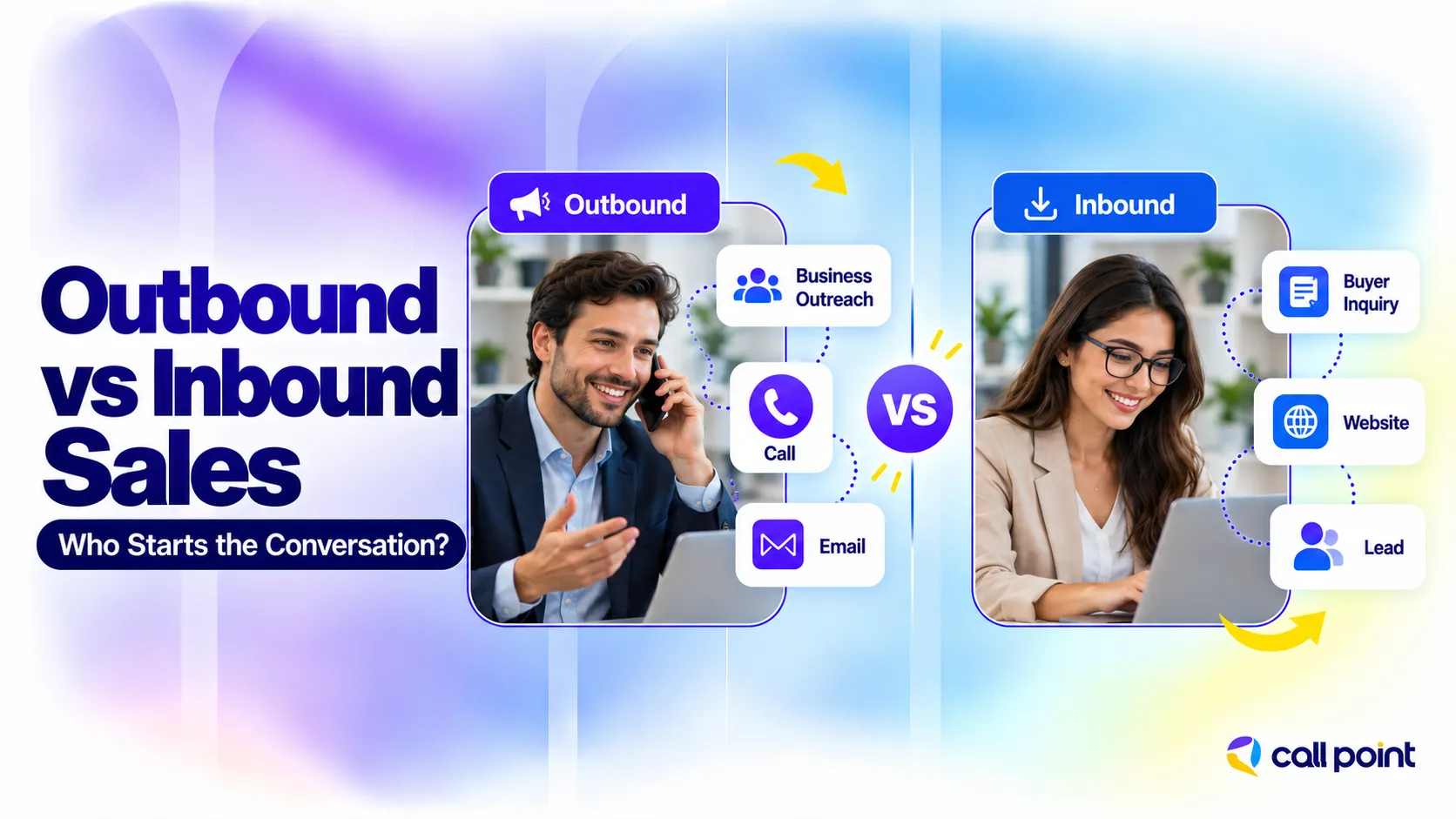
Outbound sales begins when the seller approaches a prospect. Inbound sales begins when the buyer expresses interest, such as by asking for pricing or requesting a demo. Both still require qualification and sales follow-up.
| Factor | Outbound sales | Inbound sales |
| Who starts contact? | The business approaches a selected prospect | The buyer makes an inquiry or requests contact |
| Where do prospects come from? | Researched accounts, business directories, professional contacts | Website forms, search, advertising, buyer-initiated referrals |
| What happens first? | Establish why the offer is worth discussing | Understand the inquiry and assess fit |
| What preparation is needed? | Research the account, contact, and reason for outreach | Review the inquiry and available customer information |
An outgoing call is not always part of outbound lead generation. Calling someone back after a quote request is generally inbound lead follow-up. Likewise, a reply to your cold email does not change the original source of that lead.
Businesses can run both approaches together. Keep the source in your CRM so you can compare the opportunities each approach produces.
What Are the Advantages of Outbound Sales?
Outbound sales helps businesses approach chosen customer groups and learn from direct conversations. Its value depends on reaching the right people with an offer they have a reason to consider.

Choose the Customers You Approach
You can focus prospecting on accounts that match your delivery capacity and offer. That could mean companies within your service area, businesses using a particular type of equipment, or organizations with a defined purchasing need. Exclusions matter as much as targeting. A company you cannot serve should not stay on the list simply because its contact details are available.
Introduce Your Business to Selected Accounts
A suitable customer does not have to discover your website before hearing about your offer. Outbound outreach creates an opportunity to introduce it directly. This is useful when entering a territory or approaching a specific group of accounts. You still need to establish relevance, and contacting someone does not guarantee that they will agree to a meeting.
Learn What Buyers Need
A conversation can reveal who handles purchasing, when a supplier agreement is reviewed, and which requirements affect the decision. Record those details. If several prospects reject the same part of the offer, look into the reason before expanding the campaign. Their feedback helps you distinguish a targeting problem from a service or pricing issue.
Types of Outbound Sales Reps
Sales teams divide the work in different ways. Some representatives focus on prospecting, while others handle discovery and closing. In a small business, one person often does both.
Sales Development Representatives (SDRs)
An SDR researches contacts, starts conversations, checks fit, and schedules the next sales discussion. Their notes should give the salesperson enough context to continue without starting over. Some SDRs also qualify inbound inquiries. When assigning the role, specify its responsibilities and how an opportunity is accepted by the sales team.
Business Development Representatives (BDRs)
BDRs commonly focus on finding new business through outbound prospecting. They identify target accounts and begin conversations with the people involved in purchasing. However, SDR and BDR titles are not standardized. Companies sometimes use them interchangeably, so compare the actual tasks rather than assuming a different title means a different service.
Account Executives (AEs)
Account executives explore the buyer’s needs, present the solution, prepare proposals, and manage negotiations. Some also prospect for their own accounts. For an owner-led service business, these duties often belong to the owner or sales manager. That person needs the authority to discuss pricing, delivery commitments, and contract terms.
How Does Outbound Sales Work?

A practical outbound sales process has five stages: targeting, list preparation, outreach, qualification, and the sales conversation that follows. Set clear responsibilities for each stage before increasing activity.
1. Define Your Target Customers
Build an ideal customer profile around the businesses or consumers your offer suits. For B2B campaigns, specify industry, location, size, and relevant needs. Then identify who influences and approves the purchase. The person managing a service is not always the person signing the contract. Document exclusions too, including locations you cannot cover and requirements your business cannot meet.
2. Build and Check the Prospect List
Find accounts and contacts that match the profile. Use appropriate research sources, then check names, roles, locations, and contact details. Remove duplicates and maintain suppression records for people who should not receive further outreach. Record the source and verification date in your customer relationship management system, or CRM. Accurate contact information makes someone reachable; it does not establish buying interest.
3. Start the Conversation and Plan Follow-Up
Explain who you are, what you offer, and why you contacted that person. Ask for a small next step that fits the situation, such as confirming the purchasing contact or arranging a brief call. Follow-up should reflect what was discussed. Record promised information, callback dates, and who owns the action. Stop contact when someone opts out or clearly declines, rather than continuing an automated sequence.
4. Qualify Interest and Arrange the Next Step
Check whether the prospect’s needs match your offer. Discuss purchasing responsibilities, timing, and budget where it helps assess the next step. A request for information is not automatically a qualified appointment. Before booking, confirm the attendee, purpose, date, and time zone. Then pass the salesperson the requirements, objections, and commitments already discussed.
5. Run Discovery and Manage the Buying Decision
Discovery establishes what the buyer needs before you recommend or price the work. A software demonstration should reflect the actual workflow. A service quote should reflect the scope and delivery requirements. Present the offer, answer questions, and agree on what happens next. Record whether the deal is won, lost, or still open, with a reason and follow-up owner. If the customer buys, pass the agreed details to the delivery team.
Which Channels Are Used in Outbound Sales?

Phone calls, cold email, and direct social outreach are common channels. Choose based on how the intended contact can be reached, the quality of your data, and the discussion your offer requires.
Coordinate the channels you use. Once someone agrees to a call, pause unrelated messages and brief the caller. The prospect should not have to repeat a conversation your team has already recorded.
Cold Calling
Cold calling gives a representative a chance to ask questions and respond during a live conversation. In a telemarketing campaign, the purpose could be to find the purchasing contact, qualify a need, or arrange a meeting. Use a conversation guide that covers the offer and common questions without forcing every prospect through the same script. A useful call ends with an accurate outcome, even when that outcome is no interest.
Cold Email
A cold email introduces an offer to someone who has not requested the message. Keep the reason for contact clear and ask for one next action. Avoid claiming to know problems you have not confirmed. For US commercial email, CAN-SPAM rules apply to B2B messages too. They include accurate sender information, honest subject lines, a valid postal address, and an opt-out process.
Social Selling and Direct Outreach
Professional platforms help you research people, follow company developments, and begin business conversations. A new office announcement, for example, gives you something specific to investigate before approaching the company. It does not confirm that the business needs your service. Use the information to ask a relevant question. Social selling also includes useful engagement before a direct message, rather than sending the same pitch to every connection.
What Are Examples of Outbound Sales?
Outbound sales is used in both B2B and B2C markets. These hypothetical examples show how the audience and next step change.
| Business and market | Prospect | Purpose of outreach | Next step |
| Commercial cleaning – B2B | Facilities or office manager | Discuss cleaning needs and supplier-review timing | Site assessment and quote |
| Business software – B2B | Operations manager | Explore whether the software fits a workflow need | Discovery call and demonstration |
| Residential solar – B2C | Homeowner eligible for the provider’s outreach | Establish interest and basic property suitability | Assessment with a solar specialist |
For the cleaning company, an illustrative opening could be: “We provide office cleaning in your area. Who handles reviews of your cleaning contract?” If the contact says the agreement is reviewed later in the year, record that timing and agree on whether a callback is welcome.
The B2C solar conversation asks different questions. The representative needs to establish interest, property ownership, and location before arranging an assessment. Technical suitability, costs, and any savings claims belong in a properly supported specialist discussion.
Consumer outreach also needs its own contact-rule checks. A B2B campaign’s process should not simply be copied into a homeowner campaign.
Why Do Outbound Sales Campaigns Fail?
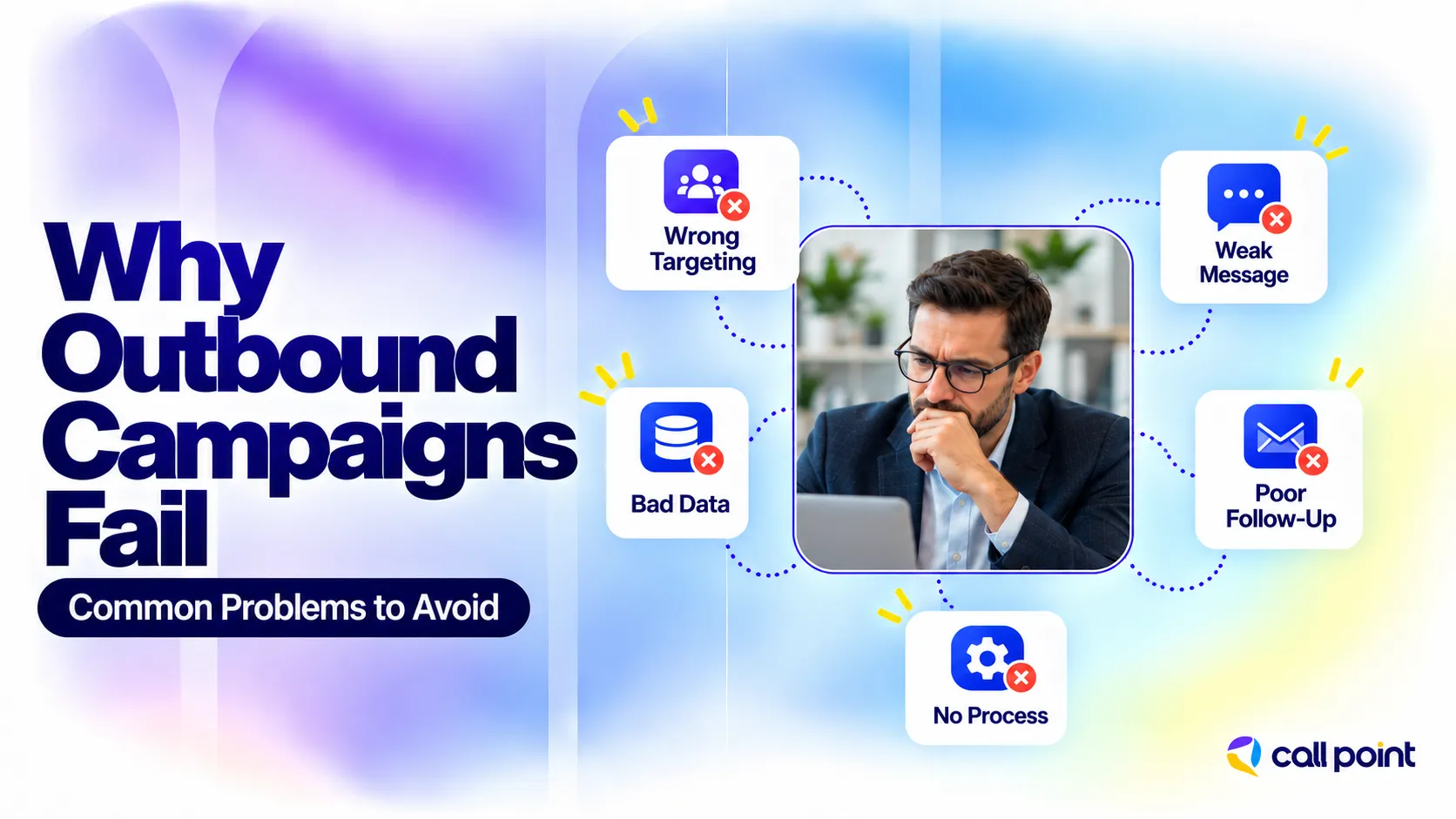
Campaigns fail when the list, message, or next sales step does not match the buyer. Diagnose where prospects stop progressing before adding more calls or emails.
Common problems include:
- The list is too broad. Prospects fall outside your territory or need services you do not provide. Tighten the criteria and remove poor-fit accounts.
- Contact details are outdated. Calls reach the wrong people and emails bounce. Track invalid records and correct the data before reusing it.
- The message has no clear reason. A company description alone gives the buyer little to discuss. Explain why their role or account is relevant to the offer.
- Follow-up is missed. Promised information or callbacks have no owner. Assign each action and record the date.
- Meetings are booked too easily. A polite reply is counted as an opportunity without checking fit. Agree on acceptance criteria before launch.
- The handoff loses context. The salesperson receives a calendar invitation without the conversation notes. Pass the buyer’s needs and agreed purpose with the booking.
Some problems sit after outreach. If well-qualified prospects attend discovery but do not progress, review the proposal, pricing, and follow-up. The prospecting team cannot solve every closing problem by making more calls.
How Do You Measure Outbound Sales?
Measure the movement from contact to conversation, meeting, opportunity, and sale. Activity counts show workload. They need to be reviewed alongside buyer responses and sales outcomes.
Conversations and Positive Replies
Track conversations with the roles you intended to reach. For email, separate interested replies from refusals, automatic responses, and opt-outs. If you report rates, state whether the denominator is call attempts, delivered emails, or unique prospects contacted. Otherwise, two reports can use the same metric name while measuring different things.
Meeting Attendance
Count meetings booked and meetings actually held. Calculate attendance as meetings held divided by meetings scheduled to occur in the selected period, multiplied by 100. Keep cancellations and rescheduled appointments visible. A booking is useful only if the sales team gets the intended conversation.
Meetings That Become Opportunities
Track how many meetings are held that meet the sales team’s opportunity criteria. Divide that number by total held meetings and multiply by 100. Use the same definition throughout the campaign. If many attended meetings are rejected, review what the outreach team is confirming before it books them.
Opportunity Win Rate
Calculate win rate as won opportunities divided by the total of won and lost opportunities, multiplied by 100. Open deals stay outside that denominator. This shows results among opportunities with a closed outcome. Compare similar campaigns or customer groups, since different offers and buying cycles affect the results.
Cost per Opportunity
Divide the campaign costs you allocate by the opportunities attributed to that campaign over a defined evaluation window. Include the agreed costs for staff, data, tools, and management. Keep the original lead source in the CRM so later deals remain traceable. Review attributed revenue separately; a low opportunity cost does not establish whether those opportunities become profitable customers.
What Should You Consider Before Outsourcing Outbound Sales?
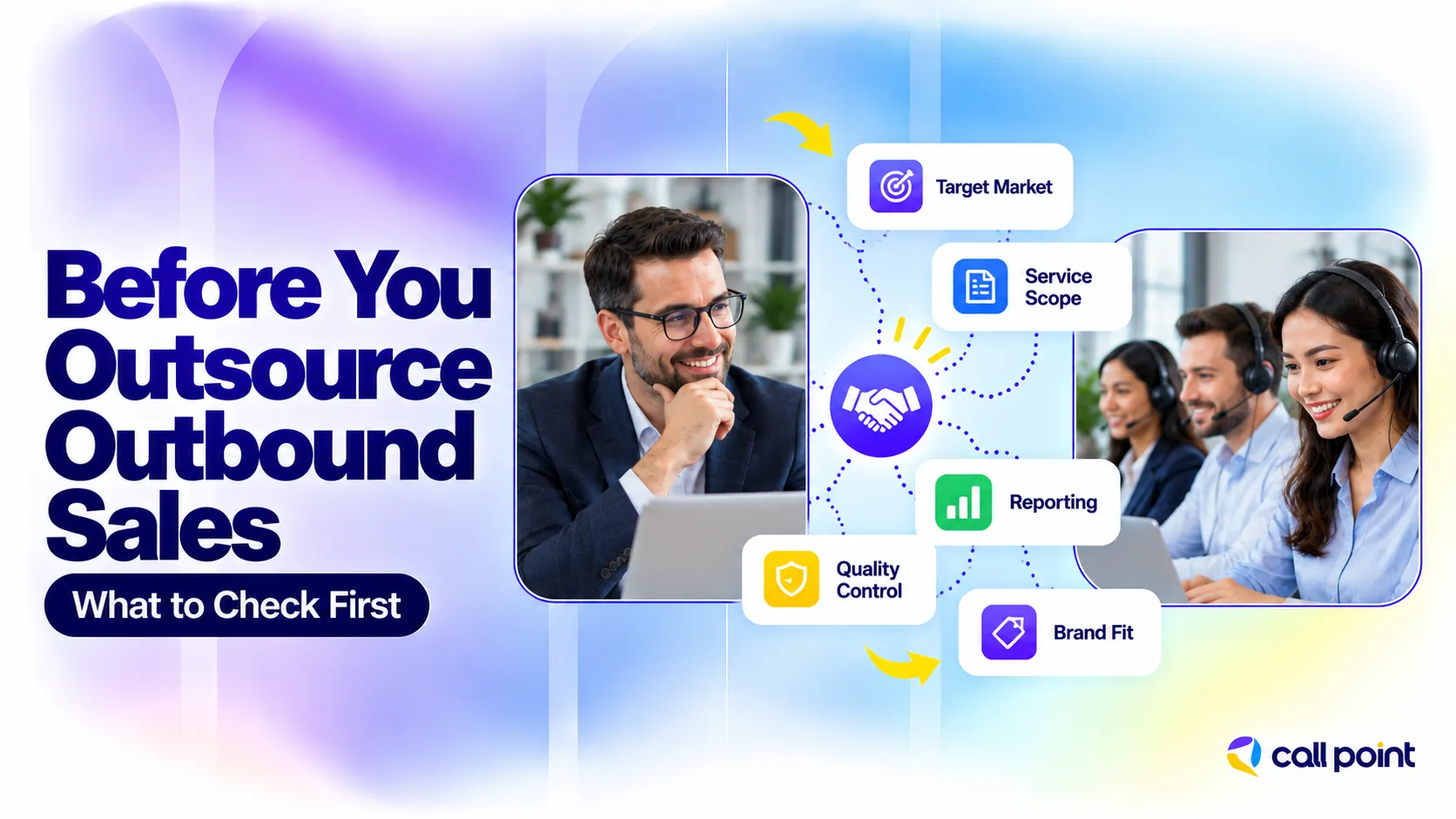
Outsourcing fits businesses that have an offer and target market but need more capacity for prospecting and follow-up. Your internal team still needs to handle the sales work retained in the agreement.
Salesforce’s 2026 State of Sales report reveals that sales representatives spend 60% of their time on nonselling activities, such as prospecting and data entry. This finding comes from a survey conducted from August to September 2025, which included 4,050 sales professionals across 22 countries, including the U.S. This data reflects overall workload and does not specifically assess outsourcing results.
Before choosing outsourced cold calling or telemarketing support, agree on:
- Scope: Which tasks the provider handles and who owns discovery, quotes, and closing.
- Qualification: What counts as a lead, an accepted appointment, and a sales opportunity.
- Training: Offer details, approved claims, service limits, and escalation contacts.
- Reporting: Required CRM notes, appointment outcomes, review frequency, and data ownership.
- Contact rules: Permitted channels, suppression procedures, and the requirements for each market.
- Costs and terms: Setup, staffing, software, data, management, minimum commitments, and changes in scope.
For US phone campaigns, review the FTC’s telemarketing guidance and other applicable calling requirements. Email compliance does not replace phone-specific checks.
Resolve an unclear offer or a lack of closing capacity before outsourcing. Also consider whether the value of a new customer supports the acquisition effort. External teams add capacity, but your business still makes pricing and delivery decisions.
How Call Point Supports Outbound Sales
Call Point Business Solutions provides telemarketing and telesales support for outbound prospecting, cold calling, qualification, appointment setting, follow-up, and campaign reporting, according to the agreed scope.
A great example is our collaboration with a janitorial lead provider that supports US cleaning companies. They wanted to connect their clients with potential customers in specific regions. Our dedicated team stepped in to make engaging calls and successfully set up appointments for them.
The client reported receiving bookings through a messaging app as the team produced them. It assessed the work through appointments set per month and described its Call Point contact as responsive. The account shows the agreed calling scope and handoff, rather than documenting a revenue increase.
For new campaigns, we align calling support with your offer, target market, qualification rules, and sales workflow. Our quality process includes agent monitoring, call and task reviews, KPI tracking, supervisor checks, feedback, and coaching. Your team handles the commercial decisions retained in the agreement.
Frequently Asked Questions
Can Small Businesses Use Outbound Sales?
Yes. A small business can begin with one customer group, a clear offer, and a manageable prospect list. The owner or an assigned salesperson needs time to handle interested prospects. Start at a scale you can follow through on, then assess conversation quality and opportunity costs before expanding the campaign.
How Long Does Outbound Sales Take to Produce Results?
There is no fixed timeframe. Initial conversations and appointments come before closed revenue, and the gap depends on the offer, budget, approvals, and purchasing cycle. Review early progress through accurate contacts, useful conversations, and accepted opportunities. Set expectations for sales around your own buying process rather than a promised number of days.
How Many Times Should You Follow Up With a Prospect?
There is no universal follow-up count that suits every prospect. Use the conversation, buying timetable, and permitted contact methods to decide the next action. A requested callback deserves different treatment from repeated silence. Each message should have a purpose, and outreach should stop when the person opts out or clearly declines.
Final Thoughts
Outbound sales needs a clear offer, a well-chosen audience, and someone responsible for the next conversation. Measure the opportunities created and what happens to them, not just the calls made.
If your team needs more calling capacity, discuss your telemarketing and outbound sales requirements with Call Point.