

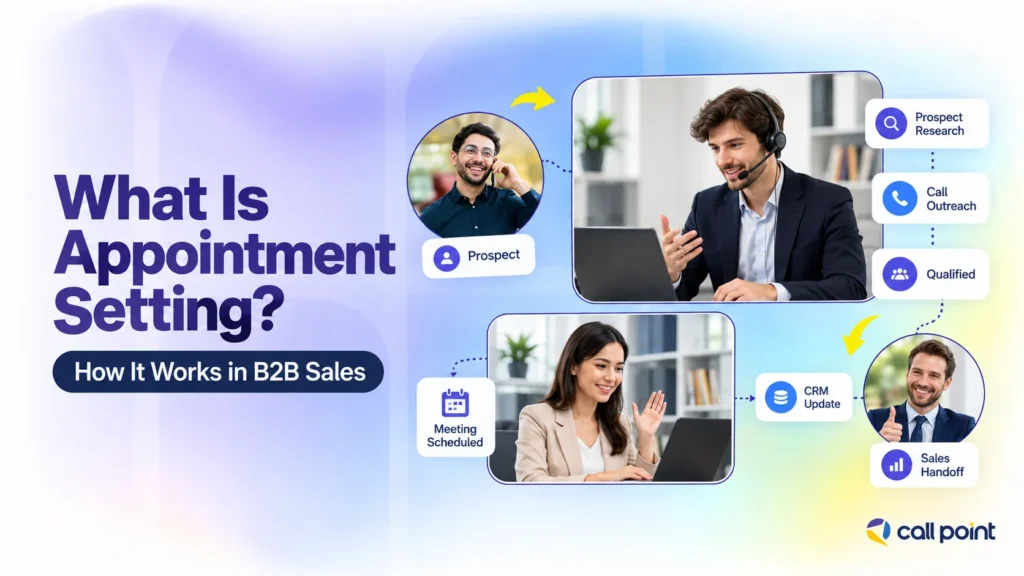
A sales calendar can look busy and still be weak. If the wrong people are taking the meetings, the numbers do not mean much. Appointment setting helps solve that problem.
It covers the work that happens before the main sales conversation. Someone has to find the right prospect, make contact, ask a few questions, and decide whether a meeting is worth booking. In B2B sales, that early work often determines whether the sales rep gets a useful conversation or a dead end.
This article explains what appointment setting means, what appointment setters do, how the process works, and what businesses should look for when building an appointment-setting process.
What Is Appointment Setting?

Appointment setting is the process of contacting potential customers and arranging meetings with a sales team. It may include outreach, basic qualification, follow-up, scheduling, and CRM updates.
Say a software company sells to dental practices. A setter may contact practice owners or office managers, ask a few questions and book interested prospects for a demo.
The job is not to push every contact onto the calendar. A useful appointment should make sense for both sides. Once the meeting is booked, the salesperson usually takes over. That is where deeper discovery, pricing, demos, or closing work begins.
Differences Between B2B and B2C Appointment Setting
B2B and B2C appointment setting have the same basic goal: get an interested prospect into a scheduled conversation.
The way they get there can be quite different.
B2B campaigns often involve longer sales cycles and more than one person in the buying process. A setter may need to reach a manager first, then speak with a director or another stakeholder before the opportunity moves forward.
B2C appointment setting is usually more direct. The person answering the call may also be the person who makes the buying decision.
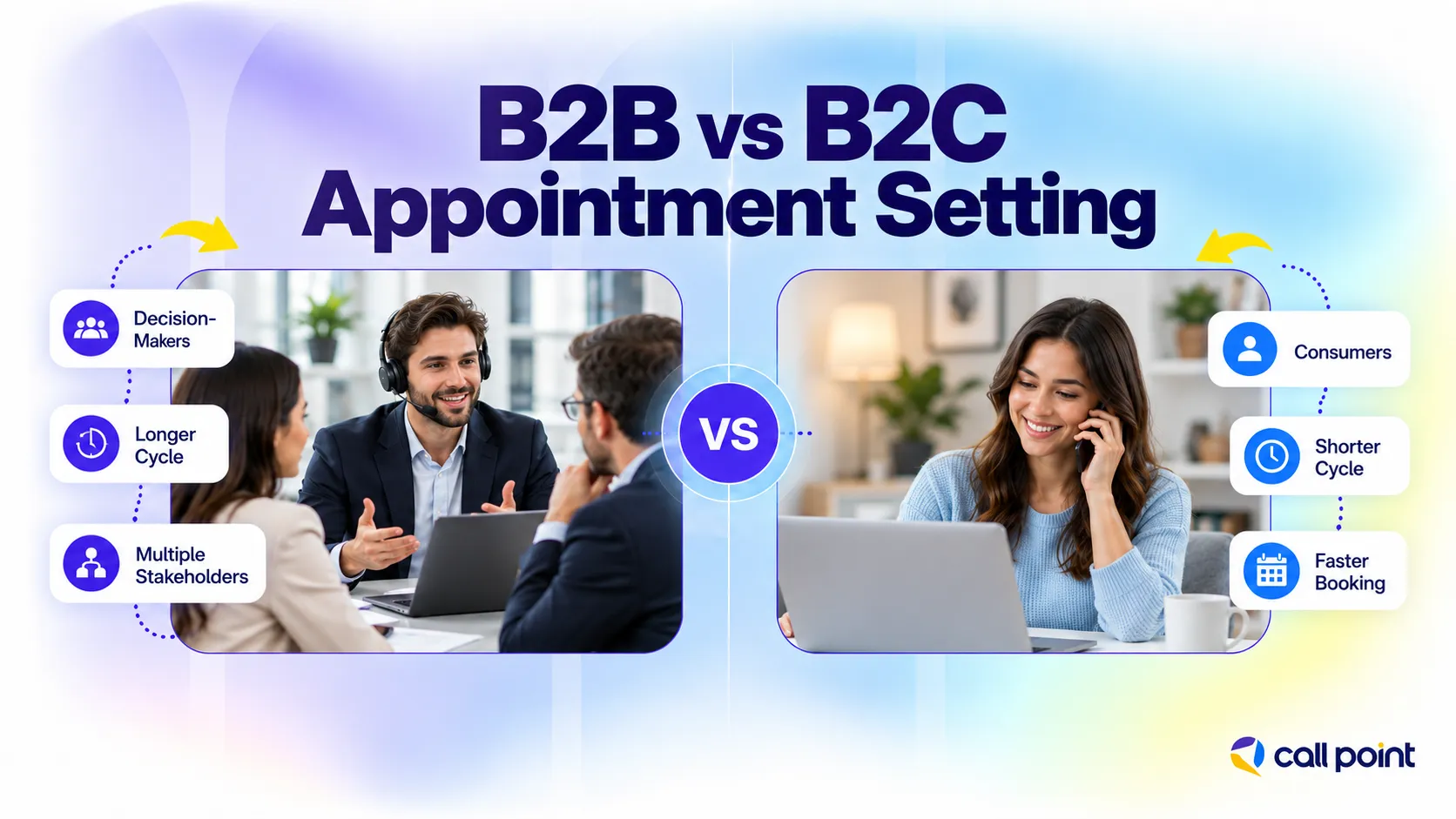
Here is a simple comparison:
| Area | B2B Appointment Setting | B2C Appointment Setting |
| Buyer | Business decision-makers or stakeholders | Individual consumers |
| Sales cycle | Often longer | Usually shorter |
| Number of decision-makers | May involve several people | Often one person |
| Qualification | Company fit, role, need, timing | Need, interest, availability, budget |
| Outreach style | More research and account-focused | Often higher-volume and direct |
| Typical meeting | Discovery call, demo, consultation | Consultation, quote, booking |
| Follow-up | May continue over several weeks or months | Often happens over a shorter period |
What Does an Appointment Setter Do?
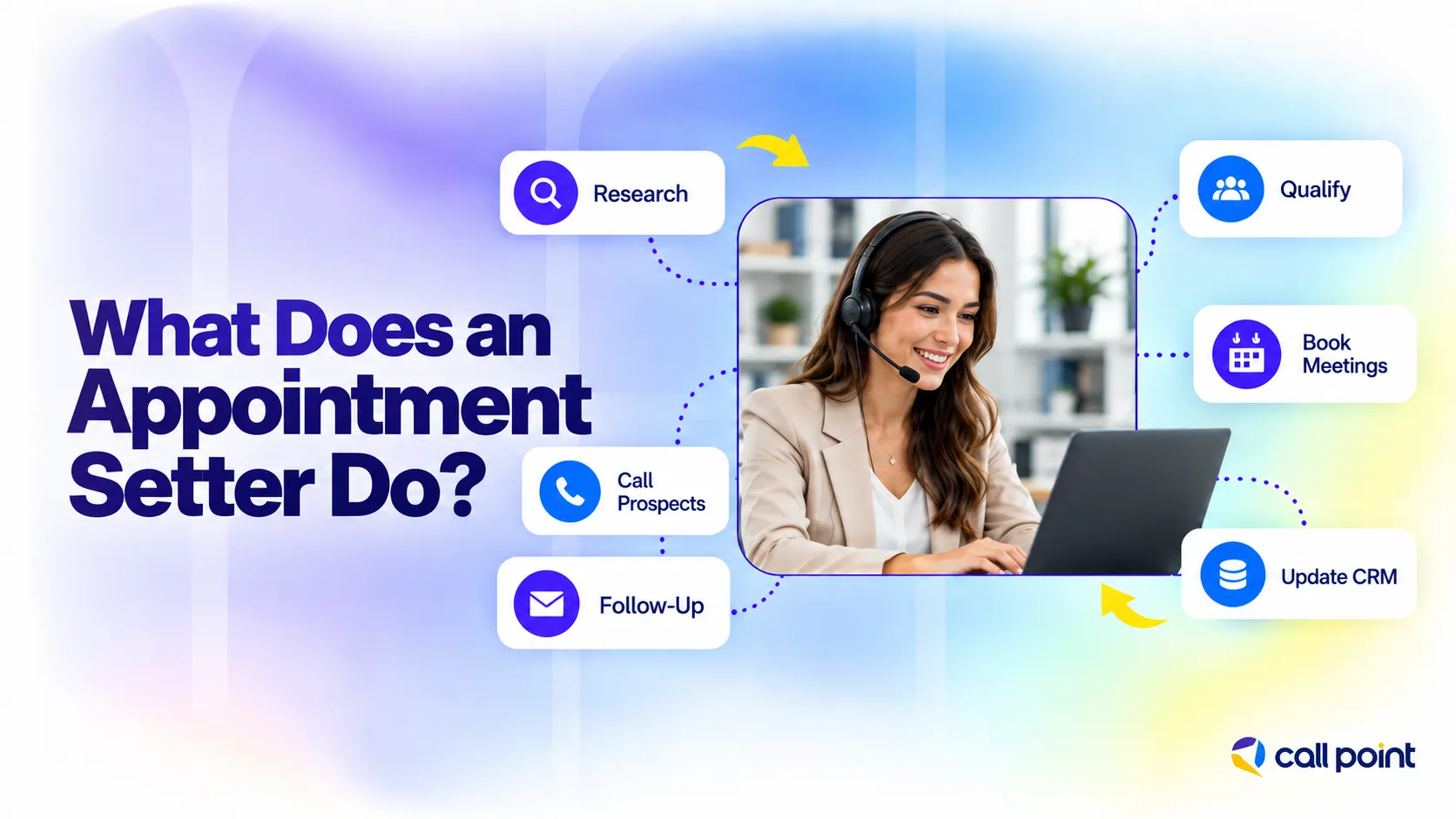
The role sits at the front of the sales process. On some days, most of the work may involve calls. On others, it may be follow-up, research, CRM updates, or going back to prospects who asked to be contacted later.
Typical tasks include:
- Researching companies and contacts
- Making outbound calls
- Sending follow-up emails
- Qualifying prospects
- Answering basic questions
- Handling early objections
- Booking meetings
- Sending reminders
- Updating CRM records
- Passing notes to sales
A lot of the job comes down to listening.
“Call me next quarter” is not the same as “We are not interested.” One needs a follow-up date. The other may need to be closed out. That sounds simple but poor tracking creates a messy sales pipeline very quickly.
Contacting Potential Customers
During the first call, the goal is usually straightforward: explain why you are reaching out and see whether the conversation is relevant.
Phone is common, but it is not the only channel. Email, LinkedIn, inbound inquiries, and old CRM leads may also be part of the process.
A cold prospect may need a short introduction. An inbound lead is different. That person may already know the business and only need help deciding on the next step.
Qualifying B2B Prospects
Before a meeting goes on the calendar, someone needs to check whether the prospect roughly fits the campaign.
That may mean looking at:
- Industry
- Company size
- Location
- Job role
- Business need
- Current situation
- Level of interest
The criteria change from one business to another. A SaaS company may care about employee count and technology. A commercial cleaning company may care more about site type, location, and who manages the property.
Sometimes the right answer is no meeting at all. If the company is clearly outside the target market, booking a call only wastes time for both sides.
Following Up With Prospects
Once someone replies, the next step is not always obvious. A prospect may say they are busy. They may ask for information first. They may want to speak next month instead.
That is where follow-up matters. In practice, good follow-up means keeping track of what was said and returning at the right time. It does not mean calling forever after someone has clearly declined.
Booking and Confirming Meetings
Once a prospect agrees to talk, the meeting needs to be easy to understand. The date, time, time zone, and purpose should all be clear. The person should also know who they are meeting. A reminder can help too. Small scheduling mistakes sound minor, but they are enough to turn a good lead into a missed meeting.
Updating the CRM
For a sales manager, the calendar invite is only part of the handoff. The CRM should also show what happened before the meeting. Useful notes can include the prospect’s role, company, questions, objections, timing, and reason for agreeing to talk.
That gives the sales rep some context. Without those notes, the next call can feel like the first conversation never happened.
How Does Appointment Setting Work?

The steps are easy to understand. What matters is how well each one is handled. A strong process usually starts with the target market, then moves through outreach, qualification, booking, and handoff.
1. Define the Target Customer
Start with the type of company you want to reach. Many B2B teams use an ideal customer profile (ICP). That may include industry, company size, location, or job role.
For example, a business may target US logistics companies with 50 to 250 employees. It may then focus on operations managers inside those companies. That gives the setter something specific to work with.
2. Find the Right Contacts
Finding the company is only half the job. Someone still needs to identify the right person inside it. That may be a manager, director, department head, buyer, or technical contact. The CEO is not always the right contact. The role should match the offer and the buying process.
3. Start the Conversation
The first message does not need to sound like a long sales pitch. A prospect should quickly understand who is reaching out and why.
Say the prospect asks, “Why are you calling me?”
The setter should be able to answer that in plain language. If the explanation takes two minutes, the message is probably too complicated.
4. Check Whether There Is a Fit
At that point, a few questions can tell you a lot. Maybe the company is too small. Maybe the person has no involvement in the buying decision. Or maybe there is a real need and the timing is good.
The purpose of the qualification is to find this out before sales spend time on the call. It does not need to feel like an interview. A few relevant questions are usually enough.
5. Book the Next Conversation
If the prospect wants to continue, the setter arranges the next step. That could be a discovery call, consultation, demo, or sales meeting. The prospect should know what they are agreeing to. A weak “maybe” should not automatically become a confirmed appointment.
6. Hand the Prospect to Sales
A good handoff is simple. The salesperson should know who the prospect is, why they agreed to meet, and what has already been discussed. That way, the next conversation starts in the right place.
What Makes a Good B2B Appointment?
A booked meeting is not always a useful meeting. Imagine a sales team gets ten appointments in one week. Six companies are too small. Two contacts have no involvement in the purchase. One person thought the call was only for general information. The calendar looks full. The sales team still has very little to work with.
A stronger appointment usually has a few things in place:
- The company matches the target profile.
- The contact has a relevant role.
- There is a real reason to talk.
- The prospect understands the purpose of the meeting.
Appointment Setting vs. Lead Generation
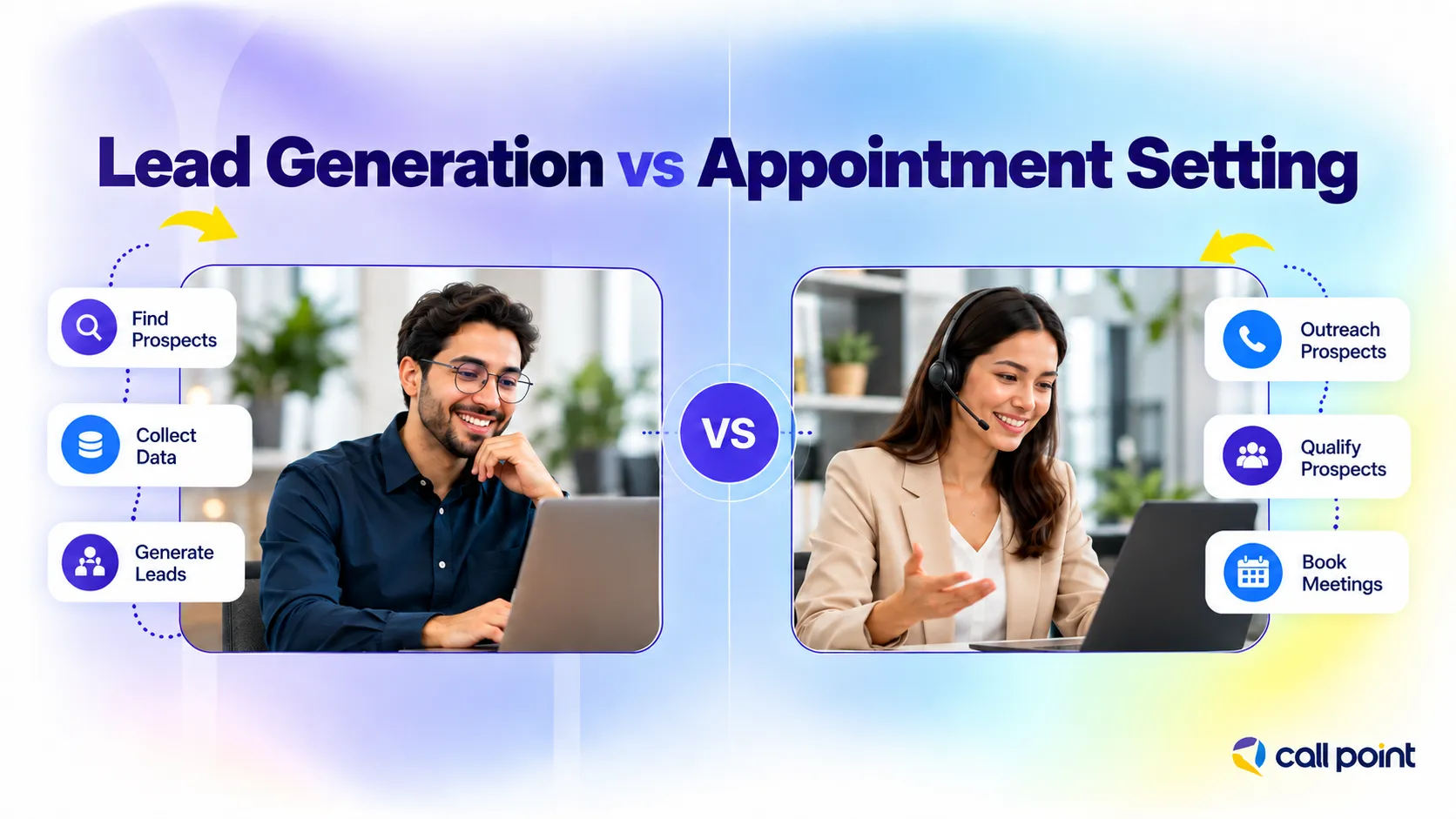
Lead generation and appointment setting are connected but they do different jobs.
| Area | Lead Generation | Appointment Setting |
| Main goal | Find potential prospects | Book sales conversations |
| Typical stage | Earlier in the funnel | After a prospect is identified |
| Common work | Research, campaigns, data collection | Outreach, qualification, follow-up |
| Main output | Lead or prospect | Scheduled meeting |
| Next step | Lead enters follow-up | Prospect speaks with sales |
A lead generation team may identify hundreds of possible buyers. Appointment setters then work through those contacts and try to turn suitable ones into meetings.
Some SDR teams handle both jobs. That is common. The important difference is that a lead is not the same as a booked sales conversation.
Is Appointment Setting the Same as Cold Calling?
No. Cold calling is only one way to start a conversation. Appointment setting covers more of the process. It can involve cold calls, email, LinkedIn, inbound leads, old CRM contacts, and referrals.
For example:
- A cold call may create the first contact.
- An email may provide more information.
- A follow-up call may qualify the prospect.
- The final step may be booking the meeting.
Why Do Companies Use Appointment Setting?
Sales reps often have several jobs at once. They may be handling demos, proposals, follow-up, negotiations, and existing opportunities.
Prospecting takes time too. Someone still has to find contacts, make the first call, send follow-ups, and arrange meeting times.
Appointment setting gives the work a clear owner. For a sales manager, that can make the pipeline easier to manage. Leads are less likely to sit untouched, and reps can spend more time on later-stage conversations.
In-House vs. Outsourced Appointment Setting

Some companies build their own team. Others use an outside provider. Both models can work, but the day-to-day setup is different.
| Factor | In-House | Outsourced |
| Recruitment | Managed internally | Provider handles staffing |
| Training | Managed by the company | Shared with the provider |
| Daily management | Direct internal control | Managed through an agreed process |
| Scaling | Usually needs more hiring | Capacity may be easier to adjust |
| Product knowledge | Builds internally | Needs good onboarding |
| Typical fit | Building a permanent SDR team | Adding prospecting capacity |
An internal team collaborates closely with sales, gradually building product knowledge under direct managerial oversight. However, this comes with a high workload involving hiring, training, managing tools, supervising performance, and handling turnover.
Outsourcing can alleviate some of this burden, especially when a business has salespeople available for meetings but lacks time for regular prospecting. Client involvement is still crucial, as the external team must understand the offer, audience, qualification rules, and sales process.
How Call Point Supports B2B Appointment Setting
Call Point Business Solutions provides B2B appointment setting as part of its wider sales support services. The scope can include prospect outreach, qualification, follow-up, appointment booking, CRM updates, and campaign reporting.
Before outreach starts, the target needs to be clear.
Which companies matter? Which job roles should be contacted? What should count as a qualified appointment?
Those answers shape the campaign.
Once the process is agreed, the team can handle early outreach and pass suitable meetings to the client’s sales team. Call Point’s documented quality process also includes agent monitoring, call and task reviews, KPI tracking, supervisor checks, client feedback, reporting, coaching, and corrective action where required.
The sales team still owns the deal. The appointment-setting team supports the work that happens before the main sales conversation.
Frequently Asked Questions
Can an appointment setter contact leads already in our CRM?
Yes. Existing CRM contacts can be used when there is a reason to follow up. That may include old inquiries, previous prospects, or people who asked to be contacted later. The setter should check earlier notes before reaching out again.
Does every appointment need to be with the final decision-maker?
No. Many B2B purchases involve several people. A department head, manager, technical contact, or internal champion may still be a useful first contact. The acceptable roles should be agreed before outreach starts.
What information should be passed to the salesperson before a meeting?
The salesperson should receive enough context to understand what has already happened. That may include the prospect’s role, company, need, objections, previous contact, and reason for taking the meeting.
Can a small B2B company use appointment-setting services?
Yes. A small company may have an owner or salesperson who is good at taking sales calls but does not have time for daily prospecting. Appointment-setting support can handle that early work while the internal team takes the meetings.
Who follows up after the first sales meeting?
That depends on how the business divides the work. In many teams, the salesperson takes ownership after the first meeting. The setter may still help with no-shows, rescheduling, or prospects that need to return to follow-up.
How can you tell if appointment setters are booking the right people?
Do not look only at the number of meetings. Check whether the prospects match the target profile, attend the calls, understand why they are there, and are considered relevant by the sales team. That feedback is usually more useful than booking volume alone.
Final Thoughts
Appointment setting sits between prospecting and the main sales conversation. It covers the early contact, qualification, follow-up, scheduling, and handoff. When those parts are handled well, the salesperson gets a clearer reason to take the meeting. A full calendar is not the real target. The better target is a calendar with people the sales team actually wants to speak with.