
A business can have hundreds of contacts in its CRM and still struggle to find anyone worth calling.
That is the problem lead generation is meant to solve. The goal is not simply to collect names, phone numbers or email addresses. It is to find people or businesses that could realistically become customers and create a reason for a sales conversation to continue.
That first interaction might come from Google, an ad, a referral or a useful piece of content. It can also start with your sales team finding a suitable company and contacting the right person directly.
This guide covers how lead generation works, the main types of leads and the benefits of building a more reliable sales pipeline.
What Is Lead Generation?
Lead generation is the process of finding potential customers, attracting or contacting them, and identifying which ones are worth moving into the sales process.
Sometimes the buyer starts the conversation. They may find your website through Google, click an ad, read a guide or ask someone for a recommendation.
Other times, the business makes the first move through cold calling, email outreach, account research or direct prospecting. A bigger contact list does not automatically mean a better pipeline. A useful lead has some combination of fit, interest, need or buying intent that gives your team a reason to follow up. Lead generation gives your team potential buyers it can identify, qualify and follow up.
What Is a Lead?
A lead is a person or business with enough interest, need or potential fit to justify further contact. Someone who reads a service page is still an anonymous visitor. If that same person requests a quote, books a consultation or responds positively to outreach, there is now a clear reason for the sales team to continue the conversation. That difference matters. Traffic creates visibility. A lead gives your business something it can act on.
Prospect vs Lead vs Qualified Lead vs Opportunity
These terms describe different points in the journey from potential customer to actual customer.
| Stage | What It Means |
| Prospect | A person or company that appears to match your target market |
| Lead | An identifiable prospect with enough interest, engagement or relevance for further contact |
| Qualified lead | A lead that meets defined customer-fit or buying-readiness criteria |
| Opportunity | A potential deal that the sales team is actively pursuing |
| Customer | A person or business that completes a purchase |
The exact definitions can vary between companies. What matters is that marketing and sales use the same definitions internally.
If one team calls every form submission a qualified lead while the other expects confirmed budget, authority and need, reporting quickly becomes confusing.
How Does Lead Generation Work?
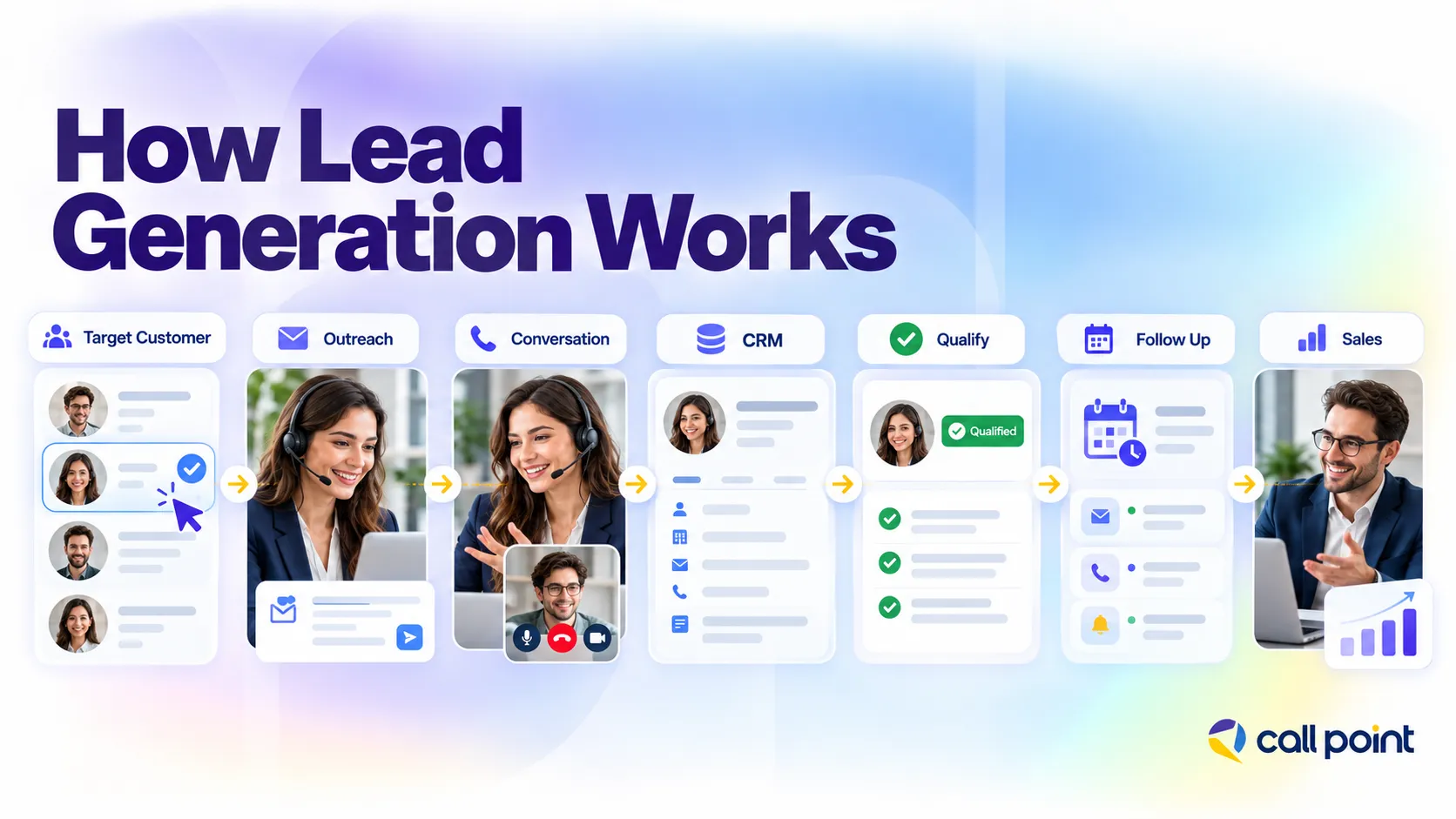
Lead generation starts by deciding who you actually want to reach. Once the target customer is clear, the business can choose suitable channels, create conversations, collect useful information, qualify each lead and pass stronger opportunities to sales.
A typical process looks like this.
1. Define the Right Customer
Start with the type of customer your business can realistically serve.
For a B2B company, that might include industry, company size, location, job title, service requirement or buying authority.
A commercial cleaning company trying to win larger contracts, for instance, may focus on facility managers and operations managers within a particular city rather than contacting every local business.
Better targeting gives the rest of the campaign some direction. Without it, sales teams can spend a lot of time speaking with people who were never suitable customers.
2. Reach Potential Buyers
Once you know who you want to reach, decide how those people are likely to find or hear from you.
Inbound channels such as SEO, useful content and paid search can attract people who are already researching a problem or service.
Outbound methods work differently. Cold calling, targeted email and direct prospecting allow the business to identify suitable accounts and contact them first.
Many companies use both approaches because they solve different problems.
3. Start a Real Conversation
Visibility on its own is not enough. A potential customer becomes more useful to the sales process when they take an action or respond in a way that gives the business more context.
That might be a quote request, demo booking, email reply, telephone conversation or consultation request.
At that point, the business has moved beyond simply being seen. There is now an actual conversation to work with.
4. Record the Important Details
Once someone responds, the useful information needs to be recorded. That may include the person’s contact details, company, role, lead source, service requirement, previous conversations and agreed next step.
Good records matter once several people are involved in the process. A prospect should not have to explain the same problem again because information was lost between marketing, appointment setting and sales.
A CRM is commonly used for this, although the exact system is less important than keeping the information accurate and accessible to the people who need it.
5. Qualify the Lead
Interest alone does not make someone a good customer. Qualification checks whether the prospect fits your target market and whether there is a realistic sales opportunity. A company might be interested in a service but sit outside the provider’s service area. Another business might be an excellent fit but have no current need.
Those are two very different situations, even though both prospects have shown some interest. Useful qualification criteria may include need, customer fit, buying authority, timing and budget where relevant to the sale.
6. Follow Up at the Right Time
Some people are ready to speak with sales immediately. Others are still researching. Follow-up should reflect that difference. A prospect who has asked for pricing may need a call or proposal. Someone who is still comparing options may benefit more from a case study, service information or a later check-in.
7. Move Qualified Leads to Sales
Once a lead is ready for a sales conversation, the sales team should receive the context collected so far.
They should know who the prospect is, what the company needs, what has already been discussed and what the agreed next step is.
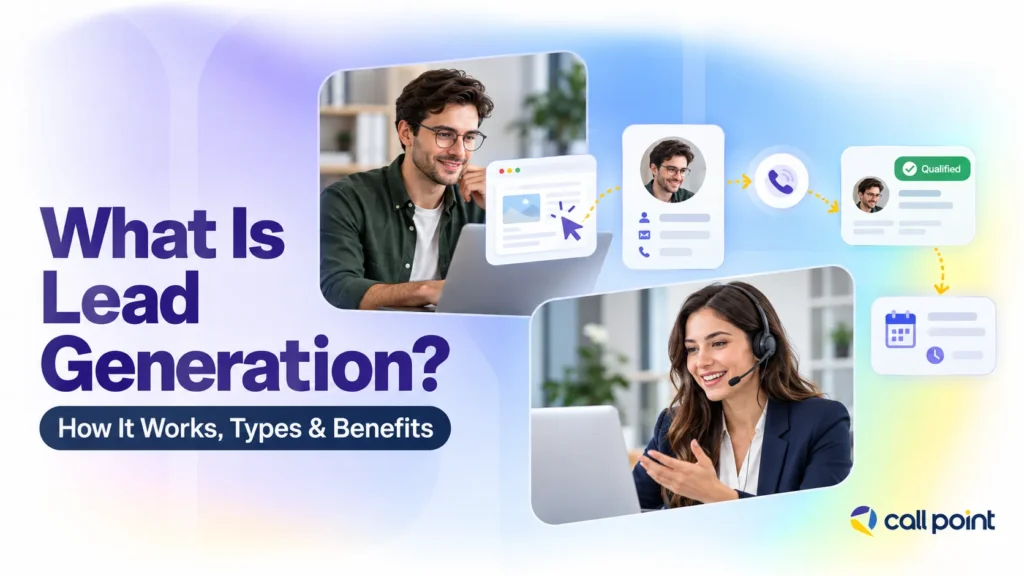
The journey may look something like:
Lead → Qualified Lead → Meeting → Opportunity → Customer
Tracking those stages tells you much more than simply counting website forms or contact records.
Lead Generation Examples: How It Works in Real Business Scenarios
The process becomes easier to understand when you follow an actual buyer journey.
Inbound Lead Generation Example
Imagine an operations manager at a growing SaaS company.
Customer enquiries have increased, and the internal support team is starting to fall behind. The manager searches Google for ways to reduce a customer-support backlog and finds an educational article.
The journey could look like this:
Google search → educational article → customer support service page → consultation request → qualification → sales conversation
The article creates the first connection, but the service page does more of the commercial work. It helps the manager decide whether outsourcing might actually solve the problem. Once they request a consultation, anonymous traffic becomes an identifiable lead and the provider can start checking requirements, timing and fit.
Outbound Lead Generation Example
Now take a commercial cleaning company trying to win more office contracts.
Instead of waiting for facility managers to discover its website, the business identifies suitable buildings and companies within its service area.
The process could be:
Target market → company research → decision-maker research → cold calling → conversation → qualification → appointment
The team may identify facility managers or operations managers, contact them directly and ask about their current cleaning arrangements.
If there is an upcoming contract review, a service problem or another genuine requirement, the conversation may move to a meeting.
The buyer did not find the cleaning company first. The company created the opportunity to start the conversation.
Both examples are lead generation. The difference is who initiated the contact.
What Are the Main Types of Lead Generation?
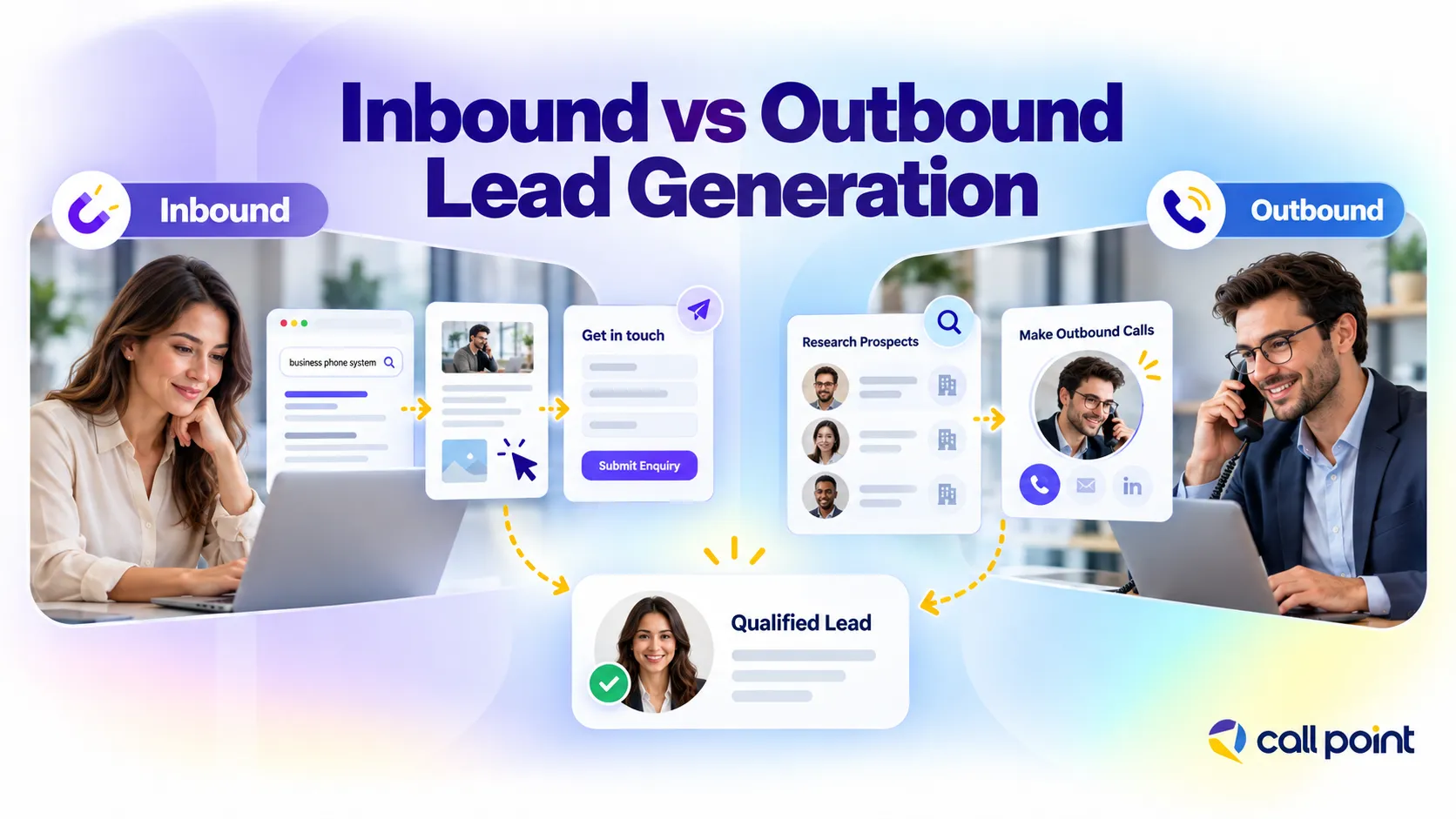
The two main types of lead generation are inbound and outbound. The practical difference is how the first meaningful interaction begins.
Inbound Lead Generation
Inbound lead generation attracts potential customers who are already researching a problem, product, service or solution.
Someone might find a business through Google, read a useful article, compare service pages and then request more information.
Common inbound channels include SEO, content marketing, paid search, referrals, social media, webinars and email subscriptions. Inbound works particularly well when buyers are already searching for the type of solution you provide.
Outbound Lead Generation
Outbound lead generation starts with the business identifying suitable prospects and making contact first. Cold calling is one example. Targeted email, account research, professional networking and direct prospecting can serve the same purpose. This approach gives the business more control over which companies, industries, locations and decision-makers it wants to reach.
Inbound vs Outbound Lead Generation
| Factor | Inbound | Outbound |
| First interaction | Usually initiated by the prospect | Initiated by the business |
| Targeting | Often based on search behaviour or interests | Usually based on chosen account or prospect criteria |
| Common channels | SEO, content, referrals, social media | Calling, email, account research, direct outreach |
| Timing | Often follows buyer activity | The business chooses when to make contact |
| Main role | Captures existing demand | Reaches selected potential buyers |
What Are the Different Types of Leads?
Not every lead is at the same stage. Some are only showing early interest, while others are already closer to making a buying decision.
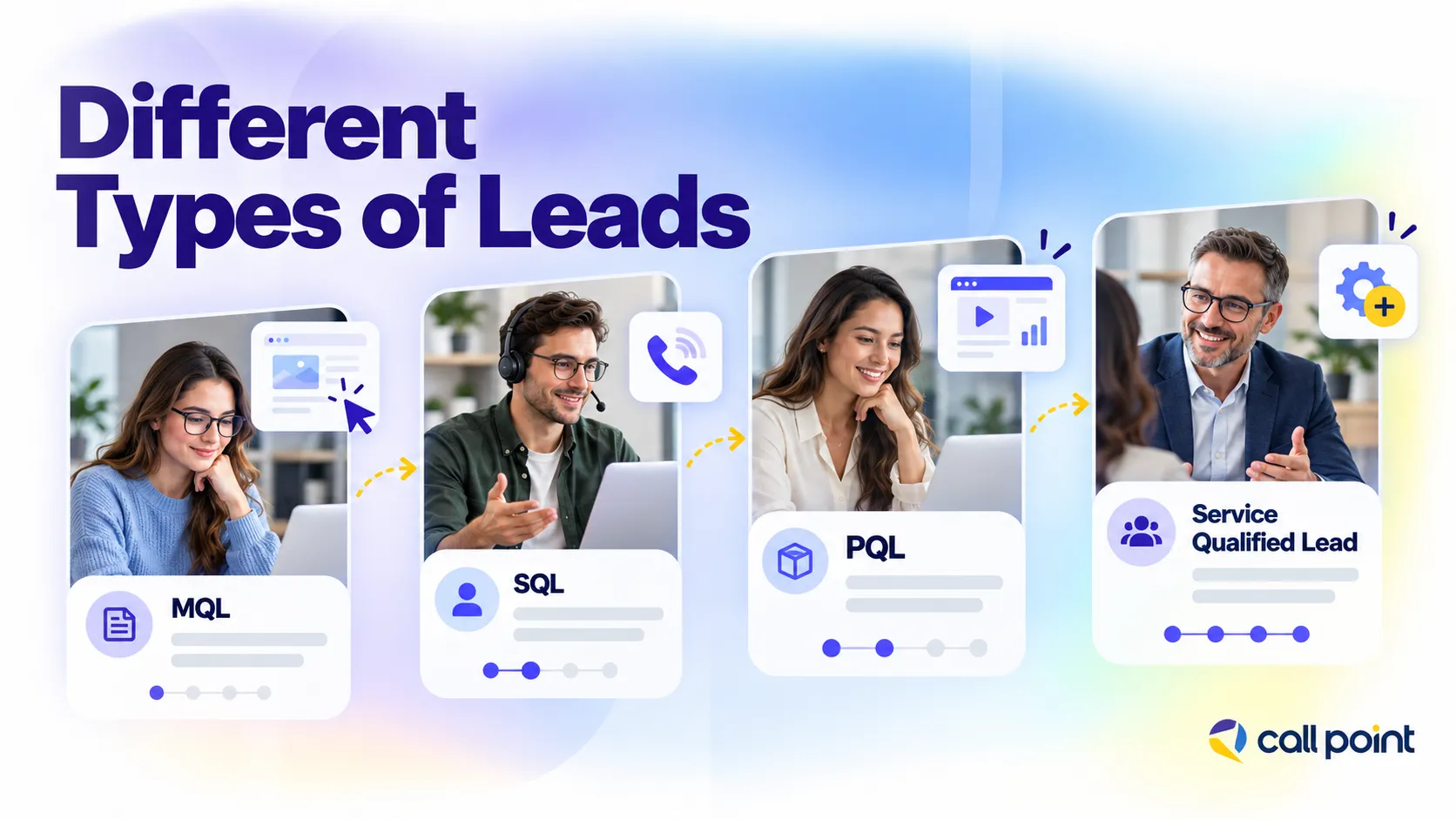
Marketing Qualified Lead
A marketing qualified lead (MQL) has shown interest through actions like reading content, downloading a guide or joining a webinar. They are interested, but may still need more information before talking to sales.
Sales Qualified Lead
A sales qualified lead (SQL) is a stronger opportunity that has been reviewed by the sales team. The person or business shows a clear need, good fit or real buying intent.
Product Qualified Lead
A product qualified lead (PQL) has already used the product through a trial, demo or free plan. Their activity suggests they may be ready to move toward a paid option.
Service Qualified Lead
A service qualified lead is usually an existing customer or contact who is interested in another service or upgrade. Because there is already a relationship, the next sales conversation can often be more direct.
What Are the Benefits of Lead Generation?
Lead generation gives businesses a structured way to find sales opportunities instead of depending entirely on chance enquiries. Its value comes from creating a repeatable process for finding the right prospects, learning what they need and deciding which conversations deserve more sales time.
More Consistent Sales Opportunities
A business that depends almost entirely on referrals can have very uneven lead flow. A strong referral month may be followed by a quiet one.
Adding search, outbound prospecting, partnerships or other lead-generation channels gives the company more than one way to create new sales conversations.
Better Use of Sales Time
Experienced salespeople are most valuable when they are speaking with people who could genuinely buy. Poor targeting forces them to spend time sorting through irrelevant contacts, incomplete enquiries and businesses that do not fit. Better research and qualification help sales focus on stronger opportunities.
Easier to See What Is Working
A structured lead-generation process makes acquisition easier to measure. A company can compare lead sources, monitor qualification rates and see which channels eventually produce sales opportunities.
A Practical Way to Explore New Markets
Lead generation can also help a business test a new customer group, industry or location. Rather than making a large investment immediately, the company can run a focused campaign and see how buyers respond. The conversations themselves can reveal whether the offer makes sense for that market.
Better Feedback From Potential Customers
Prospects tell you things analytics cannot. They ask questions. They raise objections. They explain what they currently use and why they may be considering a change.
Patterns in those conversations can help a business improve its sales messaging, landing pages, service descriptions and future campaigns.
What Makes a Lead Qualified?
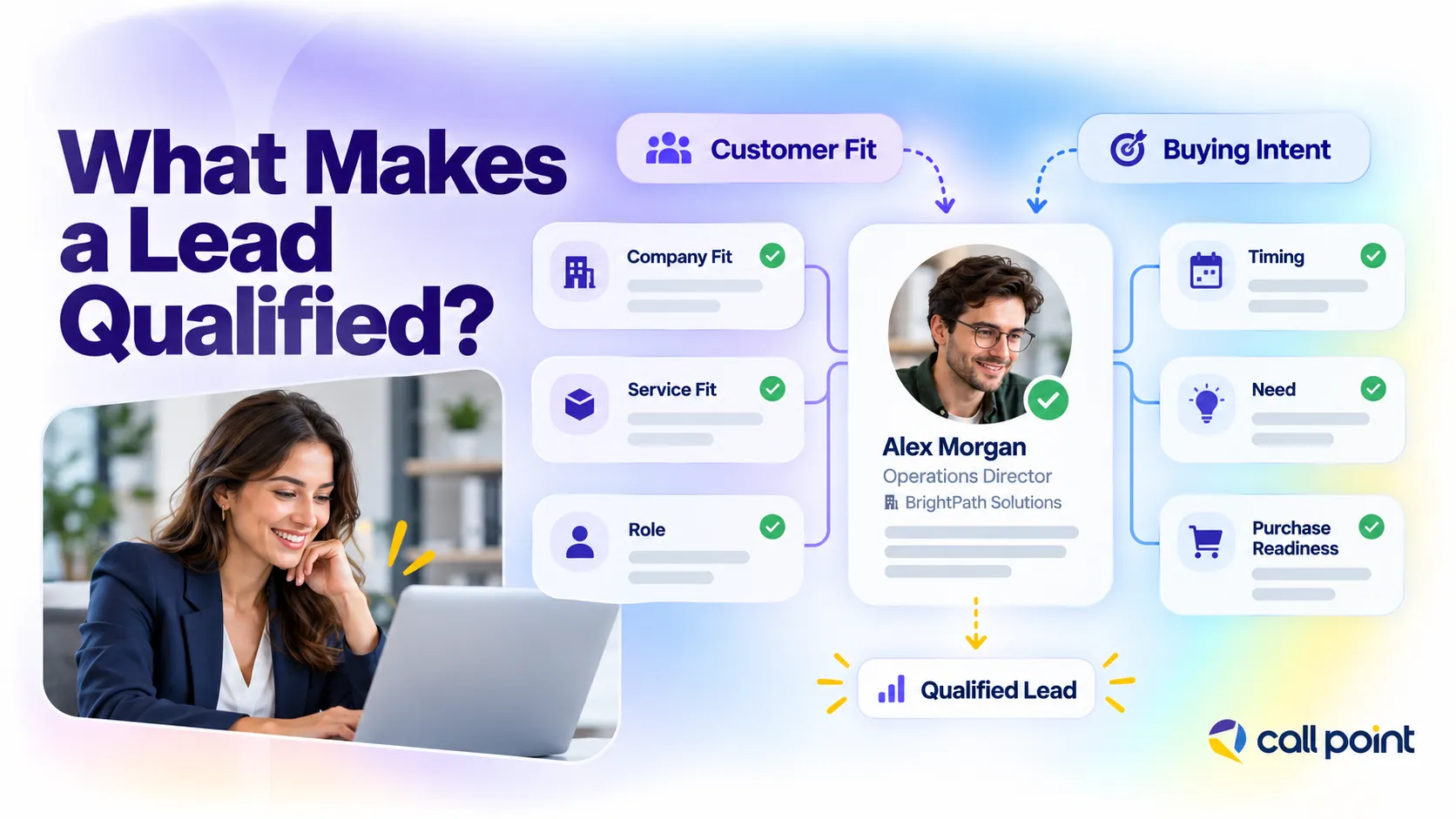
A qualified lead meets the criteria a business has set for customer fit, buying readiness or both. There is no universal qualification checklist. A five-person agency, enterprise software company and commercial cleaning provider will not evaluate prospects in exactly the same way. The criteria should reflect the way the business actually sells.
Customer Fit
Customer fit answers a basic question:
Can we realistically serve this customer?
For a B2B company, that could depend on factors such as:
- industry
- company size
- country or service area
- buyer role
- required service
- technology requirements
- business model
- operational needs
Suppose a software platform is built for large companies but a five-person business requests a demonstration. The prospect may be genuinely interested. That does not automatically make the company a suitable customer.
Buying Intent or Readiness
Buying intent asks a different question:
Is there evidence that this prospect may take action?
Useful signals can include requesting pricing, booking a demonstration, replying positively to outreach, describing an active problem or discussing a possible implementation timeframe.
A prospect can have excellent customer fit but little immediate intent. The reverse can happen too. Someone may be eager to buy but fall outside the market the business can serve. Good qualification looks at both.
Lead Generation vs Demand Generation: What’s the Difference?
Lead generation identifies or creates potential sales opportunities. Demand generation builds awareness and interest around a company, category, problem or solution.
They often work together, but they are not the same thing.
| Lead Generation | Demand Generation |
| Focuses more directly on identifiable prospects | Can influence people who remain anonymous |
| Creates a path for sales or marketing follow-up | Builds awareness and interest |
| Measures leads, qualified leads and sales progression | Often measures reach, engagement and broader demand |
| Usually involves a clear conversion action | Does not always require contact information |
For example, a company publishes an original industry report.
People may read it, discuss it and share it without ever submitting their contact details. The report is still creating awareness around the business and the problem it solves.
A month later, some of those readers may return to the site and request a demonstration. At that point, the business has an identifiable lead it can follow up with.
Demand generation helped create interest. Lead generation turned some of that interest into an actionable sales opportunity.
Which Channels Are Used for Lead Generation?
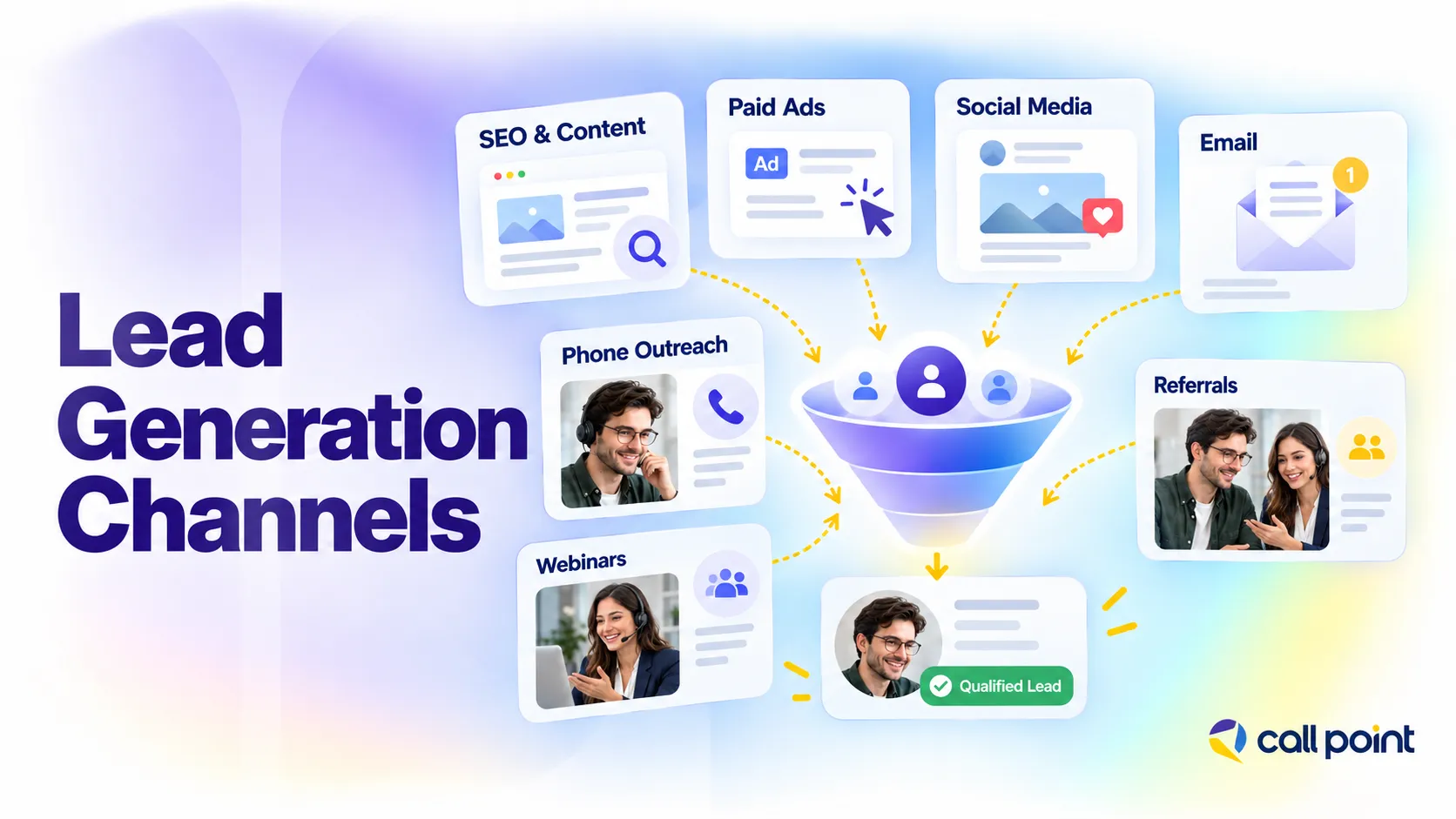
There is no single channel that works for every business. The right choice depends on where your customers spend time, how they search for solutions and how they prefer to make contact.
SEO and Content
SEO and content help people find your business when they are already looking for answers or services. Blog posts, service pages, case studies and comparison content can all bring the right visitors closer to an enquiry.
Paid Advertising
Paid ads can put your offer in front of the right audience quickly. The important part is not just getting clicks, but seeing whether those clicks turn into qualified leads and real sales opportunities.
Social Media
Social media can help businesses build visibility, start conversations and connect with potential buyers. The best platform depends on your audience and how they normally research or compare providers.
Email works for both follow-up and direct outreach. It can help nurture interested leads or start conversations with selected prospects when the message is relevant and well targeted.
Phone Outreach
Phone outreach gives you a direct way to speak with potential customers. It works well when you need to understand a prospect’s needs, answer questions or qualify an opportunity quickly.
Events and Webinars
Events and webinars can attract people who are interested in a specific topic or business problem. They are also useful for starting conversations with prospects who may not be ready to buy straight away.
Referrals and Partnerships
Referrals often come with a higher level of trust because someone already knows your business. Partnerships can also introduce you to new prospects that may be difficult to reach through search or advertising alone.
How Do You Measure Lead Generation Success?
Lead-generation performance should be judged by what happens after a lead is created, not simply by how many names enter the database. A campaign producing fewer but better-qualified leads may be far more useful than one producing hundreds of contacts that never progress.
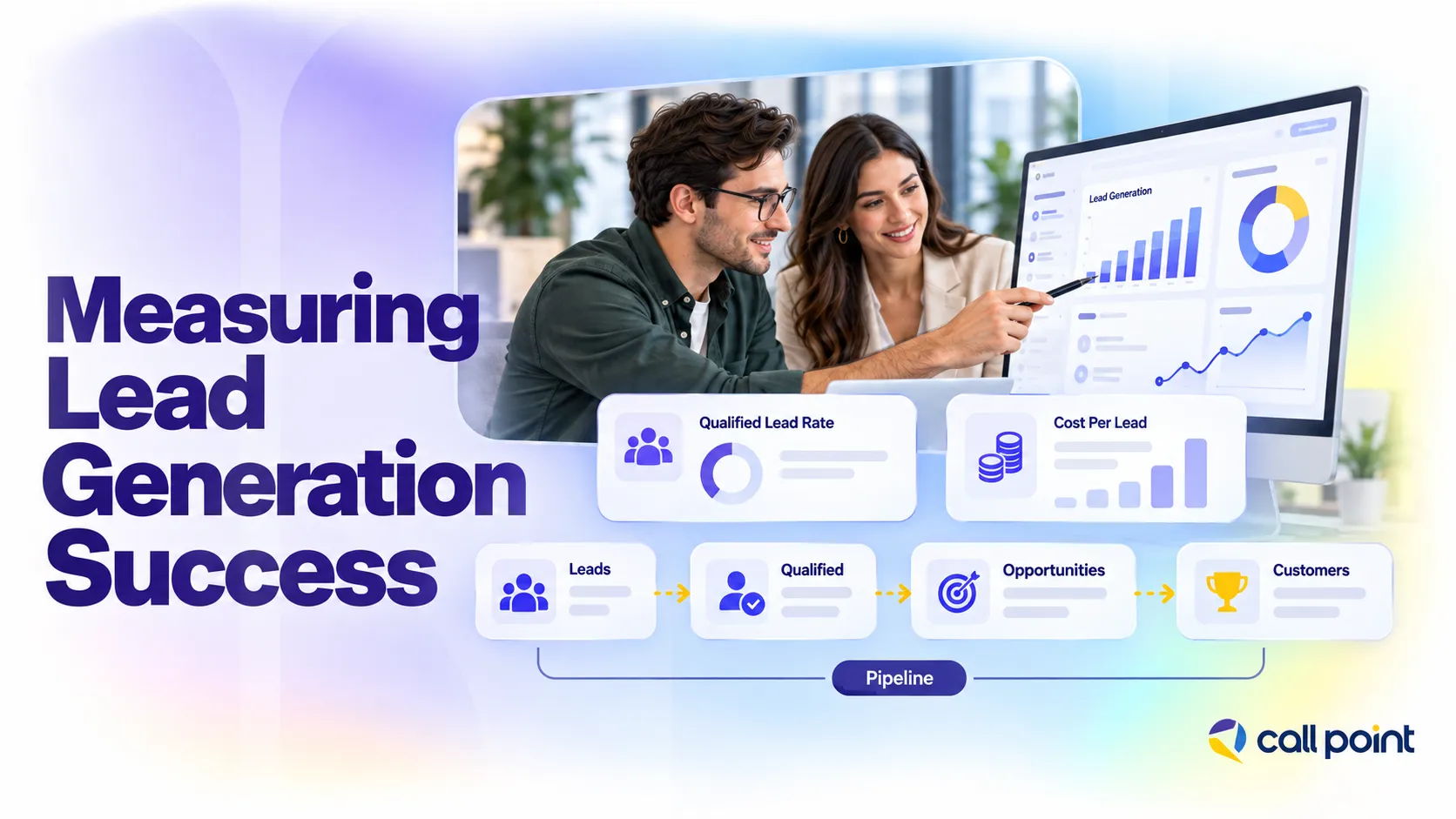
Useful metrics include:
| Metric | What It Tells You |
| Leads generated | How many leads does a campaign create |
| Cost per lead | Average acquisition cost for each lead |
| Qualified lead rate | How many leads meet your qualification criteria |
| MQL-to-SQL rate | How many marketing-qualified leads progress to sales |
| Lead-to-opportunity rate | How many leads become active sales opportunities |
| Lead-to-customer rate | How many leads eventually become customers |
| Pipeline generated | Potential sales value associated with opportunities |
| Customer acquisition cost | Overall cost of acquiring a new customer |
The right metrics depend on the business model. A company with a long B2B sales cycle may care heavily about qualified opportunities and pipeline value. A simpler sales process may place more emphasis on lead-to-customer conversion.
Why Do Lead Generation Campaigns Fail?
Most weak campaigns have a problem somewhere before the sales conversation even begins.
The target audience may be too broad. Contact data may be inaccurate. The message may have little connection to the prospect’s situation. Sometimes the campaign creates interest, but nobody follows up while that interest is still fresh.
Volume can hide these problems.
A spreadsheet containing 300 contacts looks productive. If most of those companies are outside the target market, the number means very little.
Qualification can create another gap. Marketing may consider a contact promising because they downloaded something, while sales sees no real need or buying intent.
A better campaign starts with clear targeting and keeps that definition consistent through research, outreach, qualification and reporting.
How Is AI Changing Lead Generation?
AI can reduce some of the manual work involved in lead generation. Teams can use it to assist with prospect research, organise CRM information, analyse large datasets, support lead scoring or prepare follow-up drafts. It can also help sales teams spot patterns that would take longer to find manually.
Buyers can use AI tools on their side as well. A prospect may use them to research a problem, compare approaches or prepare questions before contacting a provider.
The limitation is simple: AI does not repair a weak campaign. Poor prospect data is still poor data. A badly defined audience is still badly defined. Automating an irrelevant message only helps you send irrelevant messages faster.
Human judgement remains important when deciding who to target, what counts as a good opportunity and how a real sales conversation should move forward.
Can Businesses Outsource Lead Generation?
Yes. Businesses can outsource individual lead-generation tasks or a larger part of the process to an external team. The work may include prospect research, list building, cold calling, lead qualification, follow-up, appointment setting and CRM updates.
This can make sense when internal salespeople are spending too much of their time researching contacts or making initial outreach instead of handling qualified sales conversations.The business should still define what a good prospect looks like.
Target market, offer, qualification criteria, messaging and handover expectations should be clear before an external team begins representing the company.
How Call Point Supports Lead-Generation Campaigns
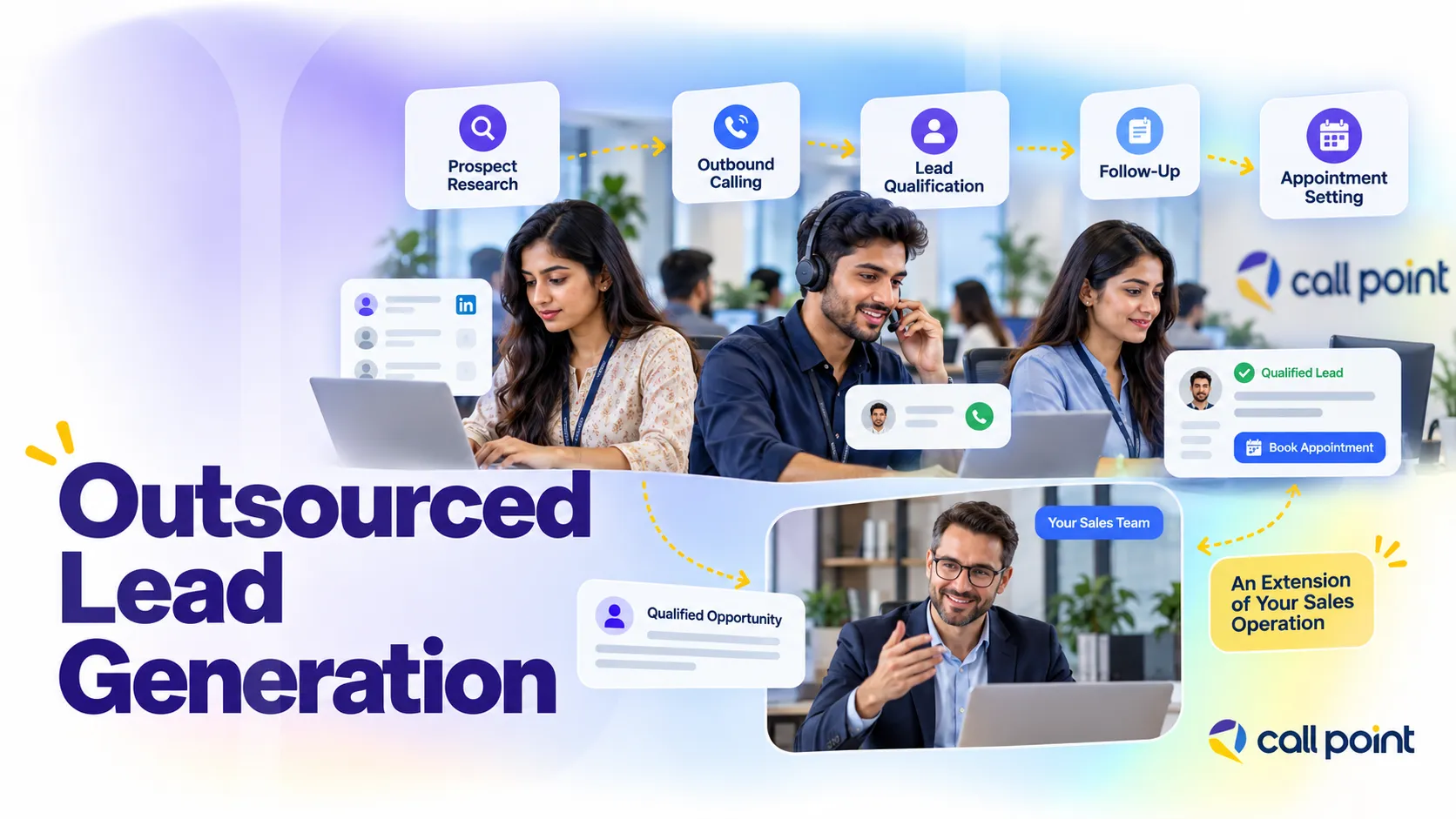
Call Point Business Solutions supports businesses with the time-consuming parts of lead generation, including prospect research, outbound calling, qualification, follow-up and appointment setting.
Take Zoom Office Cleaning, one of our clients. The business wants to reach office managers, facility managers and business owners who may need commercial cleaning services.
For a commercial cleaning campaign like this, we can start by narrowing the list to businesses within the client’s service area and identifying people involved in cleaning or facilities decisions. The first conversation then focuses on whether there is a current contract, an upcoming review or a service problem worth discussing.
That gives the client’s sales team more time to focus on people who have a genuine reason to discuss the service rather than working through an unfiltered list of cold contacts.
Businesses that need additional outbound capacity can explore Call Point’s lead-generation and telemarketing services or discuss a campaign built around their target market and qualification requirements.
Frequently Asked Questions
Is cold calling a form of lead generation?
Yes. Cold calling is a form of outbound lead generation when a business contacts selected prospects to identify potential need, interest or customer fit. The conversation may also be used to qualify the prospect, arrange an appointment or decide that no further follow-up is needed.
Does Every Prospect Become a Lead?
No. A prospect is someone who appears to fit the target market. A lead usually has enough identification, engagement, interest or relevance to justify further follow-up. The exact point at which a prospect becomes a lead depends on how the company defines its sales process.
When Should a Lead Be Disqualified?
A lead should usually be disqualified when it clearly falls outside the company’s agreed criteria or there is no realistic sales opportunity. That may happen because of location, company size, service requirements, buying authority, lack of need or a clear statement that the prospect is not interested. Disqualification is useful. It prevents the sales team from repeatedly chasing contacts that are unlikely to progress.
What Information Should Sales Receive With a Qualified Lead?
Sales should receive enough information to continue the conversation without making the prospect start again.
That normally includes contact and company details, the identified need, qualification notes, previous conversations, important objections and the agreed next step.
The exact handover information should match the company’s sales process.
How Can a Business Improve Lead Quality?
Lead quality usually improves when targeting and qualification become more specific.
Define the type of customer you want, use reliable prospect information, make the offer relevant to that audience and agree on what qualifies someone for sales follow-up.
Then look beyond initial lead numbers. Track which leads actually become sales opportunities and customers.
Can Small Businesses Use Lead Generation?
Yes. Small businesses do not need large campaigns to use lead generation. A focused campaign might target one service, customer type or location through search, referrals, partnerships, content or direct outreach. Starting with a narrow audience can actually make it easier to see which messages and channels are producing useful conversations.
Final Thoughts
Good lead generation is less about filling a database and more about creating sales conversations worth having. That starts with knowing who you want to reach. The next job is finding those people, learning whether there is a genuine need and giving sales enough context to continue the right conversations.
Inbound channels can capture people who are already searching. Outbound prospecting can introduce your business to suitable companies before they come looking for you. In many cases, the strongest approach uses both.
The process does not need to be complicated. Clear targeting, useful prospect information, sensible qualification and consistent follow-up are usually more valuable than simply chasing a bigger lead number.