
A potential customer fills out your contact form, asks for pricing, or requests a consultation. That’s a good sign, but what happens next matters. If nobody responds promptly, asks the right questions, or follows up, the opportunity can easily be lost.
This is where inbound sales comes in. It focuses on handling existing customer interest and turning suitable inquiries into real sales opportunities. A good process helps your team understand what customers want, identify serious buyers, and avoid spending time on leads that aren’t a good fit.
What Is Inbound Sales?
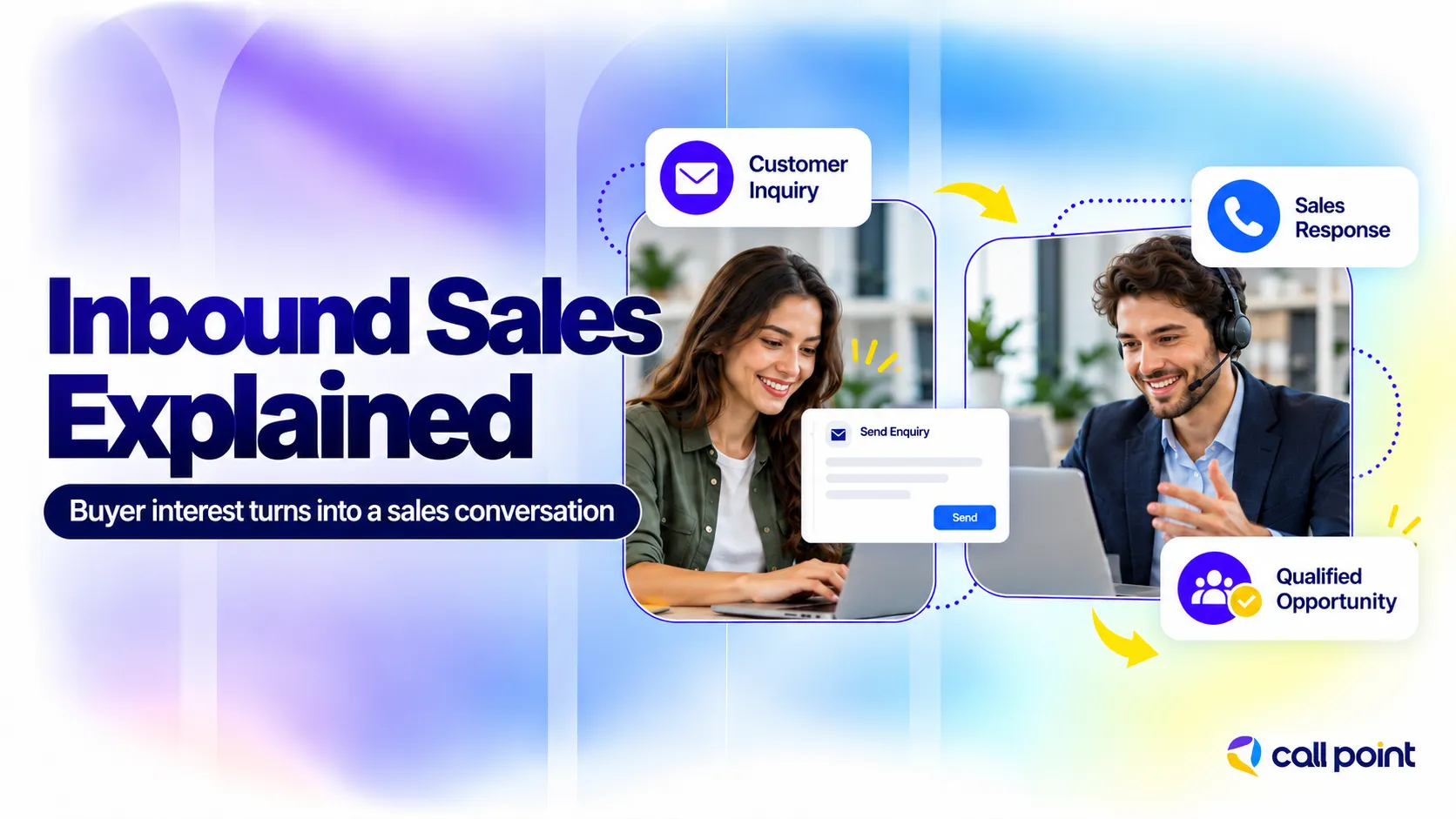
Inbound sales begin when someone contacts a business or shows interest in its products or services. They might call after visiting your website, complete a quote request form, book a product demonstration, or send a message through live chat.
The sales team then follows up to understand what the person is looking for and whether the business can help. These inquiries come from different sources, including Google searches, paid advertising, referrals, social media, and business listings.
However, not everyone who gets in touch is ready to make a purchase. Someone asking about pricing might have an urgent requirement, while another person could be researching options for a project several months away.
That’s why inbound sales involves more than answering calls or replying to emails. Your team needs to understand each inquiry, identify suitable prospects, and help them move towards a decision.
Inbound Marketing vs. Inbound Sales
Inbound marketing and inbound sales work together, but they handle different parts of the customer’s journey. Marketing attracts potential customers through blog articles, search engines, advertising, and other channels. Sales takes over when someone wants to discuss their requirements or explore a purchase.
For example, a commercial cleaning company might publish an article about office cleaning schedules. Reading that article is part of the marketing journey. When a facility manager contacts the company to discuss cleaning their building, the sales process begins. The transition works better when the salesperson already knows what the customer asked about.
Inbound Sales vs. Inside Sales
Inside sales refers to selling remotely, usually through phone calls, emails, video meetings, and online communication. Inbound sales describes how the sales conversation starts. A salesperson working remotely can handle an incoming quote request and also make outbound calls to businesses that haven’t contacted the company. Both activities fall under inside sales, but only the first is inbound sales.
What Is The Difference Between Inbound And Outbound Sales?
The biggest difference between inbound and outbound sales is who makes the first move. With inbound sales, a potential customer has already contacted your business or requested information. With outbound sales, your team reaches out to someone who hasn’t directly asked to speak with you.
Here’s how the two approaches compare.
| Factor | Inbound Sales | Outbound Sales |
| First contact | The customer contacts the business | The business approaches the prospect |
| Common sources | Website forms, incoming calls, referrals, and demo requests | Cold calls, prospect lists, and targeted emails |
| Customer interest | The prospect has already shown some interest | The salesperson needs to establish interest |
| Sales activity | Responding, qualifying, advising, and following up | Introducing the business, finding interested buyers, and developing opportunities |
| Best suited for | Businesses receiving inquiries from potential customers | Businesses looking to reach new prospects directly |
Neither approach is automatically better.
For example, an IT support company might receive inquiries from businesses searching for managed IT services. Its inbound sales team handles those requests.
At the same time, the company might contact selected businesses that fit its target market, even if they haven’t made an inquiry. That’s outbound sales. Many businesses use both approaches. What matters is whether the leads are relevant, how much they cost to acquire, and how many eventually become customers.
What Does an Inbound Sales Funnel Look Like?
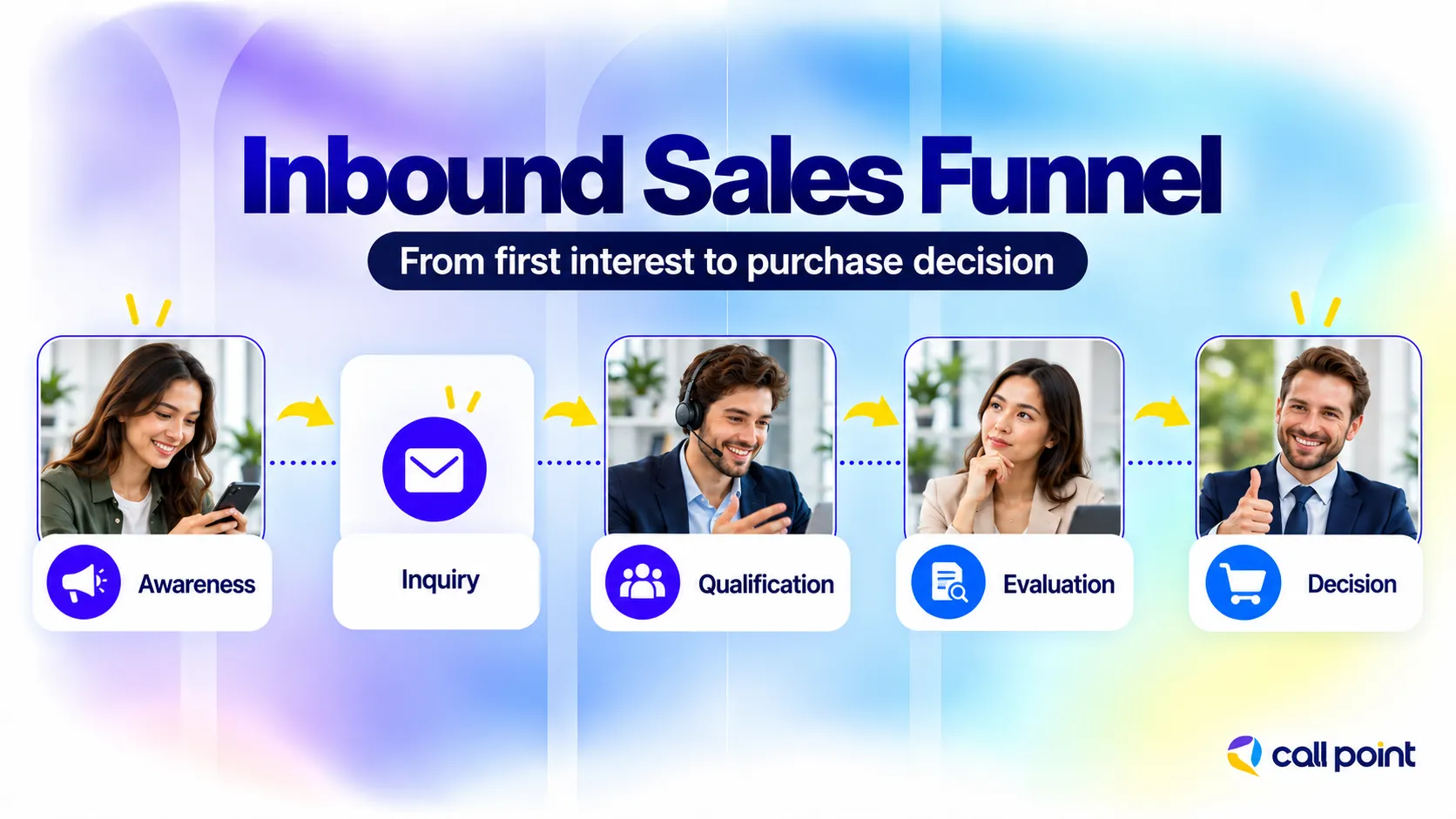
An inbound sales funnel shows the stages a potential customer goes through before deciding whether to buy. It helps businesses understand where each prospect stands and what the sales team needs to do next.
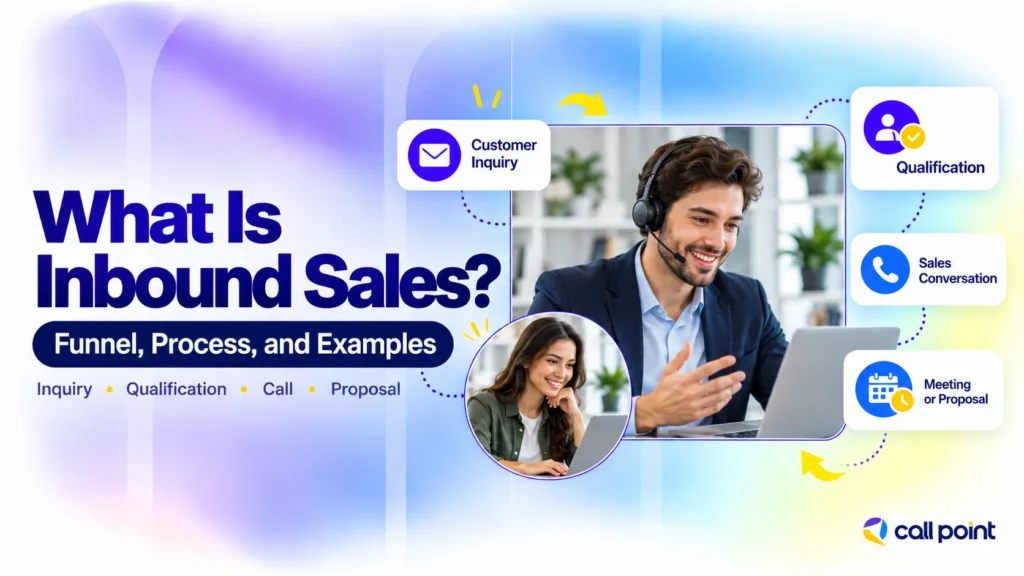
A typical inbound sales funnel has five stages.
1. Awareness: The Customer Identifies a Problem
The process often begins when someone realizes they need help with something. A facility manager might notice that the current cleaning contractor isn’t keeping up with daily requirements. They start searching Google, asking other managers for recommendations, or comparing cleaning companies. At this point, they’re gathering information rather than speaking with a salesperson. They become an identifiable lead when they contact the business or provide their details.
2. Inquiry: The Customer Contacts Your Business
Once a person finds a business that looks suitable, they might complete a contact form, call the sales team, or request a quote. For example, someone could ask, “How much would it cost to clean our office five days a week?” The sales representative needs to record the inquiry, understand what information is missing, and respond. Assigning someone to handle the request is important, especially when inquiries arrive through different channels.
3. Qualification: The Sales Team Checks Whether There’s a Good Fit
Not every inquiry is suitable for your business. A salesperson needs to check what the customer wants, where they’re located, when they need the service, and whether your company can meet those requirements. A prospect looking to start immediately will need different attention from someone planning for next year. If the request doesn’t match your services, explain that clearly rather than continuing a conversation that won’t lead anywhere.
4. Evaluation: The Customer Reviews the Offer
At this stage, the prospect is seriously considering the product or service. They want to understand the price, what they’ll receive, how the service works, and whether there are any limitations. A cleaning company might arrange a site inspection before preparing its proposal. A software provider might offer a demonstration. The salesperson’s job is to answer the customer’s questions and explain the proposed solution without pushing them into a decision before they’re ready.
5. Decision: The Customer Accepts or Declines
The final stage comes when the customer makes a decision. They might accept the proposal, choose another provider, or postpone the purchase. If they proceed, the sales team needs to pass the agreed scope, customer information, and any outstanding requirements to the people delivering the service. If they decline, recording the reason can help the business understand what happened. Prospects who postpone should be tracked separately from active opportunities.
These stages provide a useful way to organize sales activity, although customers don’t always move through them in the same order. Some people arrive ready to buy, while others need several conversations before reaching a decision.
How Does the Inbound Sales Process Work?
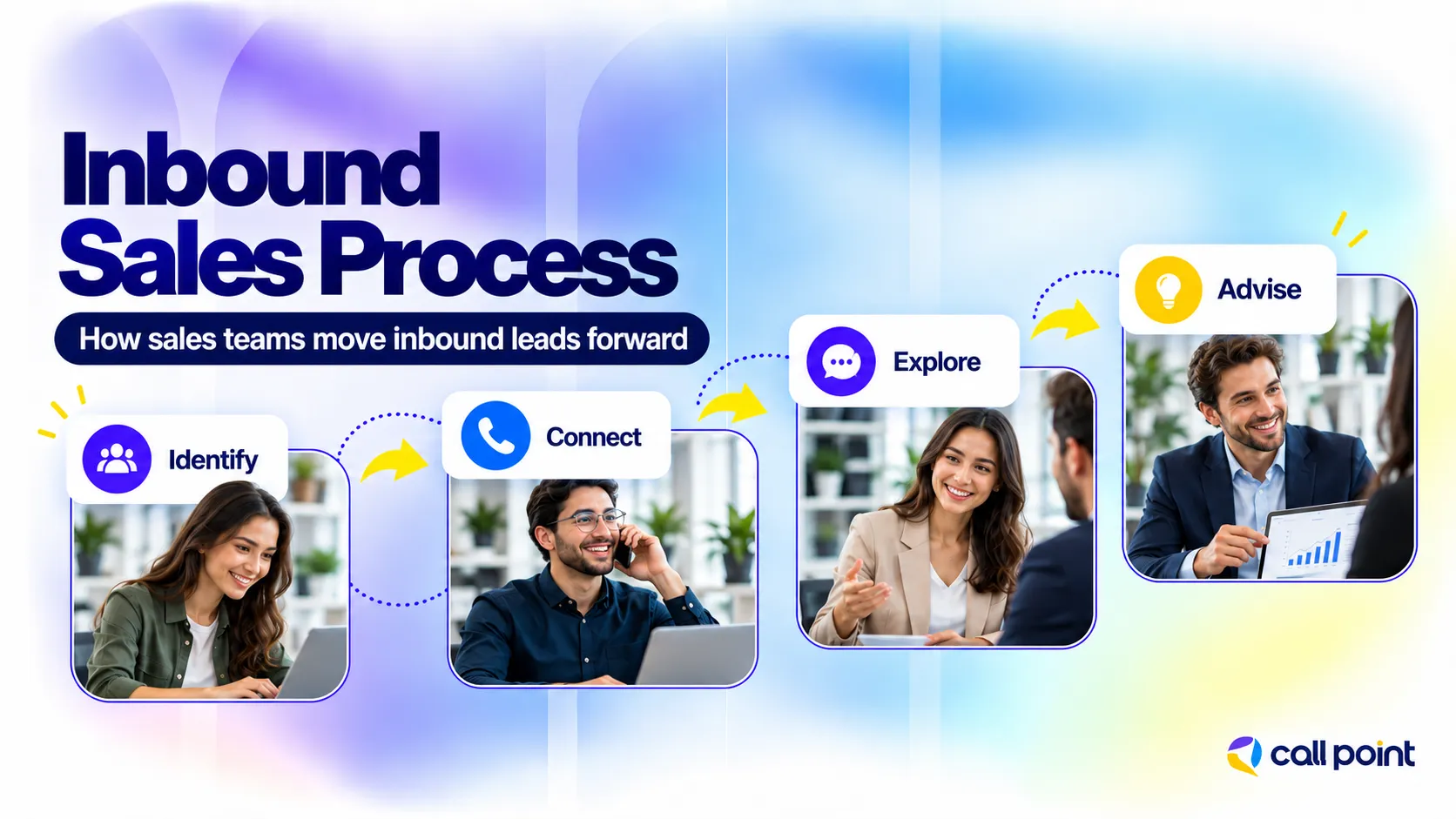
The sales funnel describes where a customer is in their buying journey. The inbound sales process explains what your team does to help them.
According to HubSpot Academy’s inbound sales methodology, the process includes four main steps: identify, connect, explore, and advise.
1. Identify: Find Potential Customers Who Have Shown Interest
Start by reviewing incoming inquiries and understanding what each person has requested. Someone asking for a detailed proposal is likely to need more immediate sales attention than someone downloading a general guide. Look at the available information, check whether the request matches your services, and decide how to respond. The aim is to recognize genuine opportunities without treating every visitor or inquiry as a potential sale.
2. Connect: Start the Conversation
When contacting an interested prospect, begin with the reason they reached out. If someone asks about evening customer support, you could say, “You mentioned needing help with calls after business hours. What times are you looking to cover?” This makes the conversation useful from the beginning. It also gives the prospect a chance to explain their situation before the salesperson starts discussing services.
3. Explore: Understand What the Customer Needs
Once the conversation begins, find out what’s happening in the customer’s business and what they’re trying to improve. Ask about their current arrangement, the problems they’re facing, and the results they expect. For a company considering outsourced customer support, you might discuss call volume, operating hours, existing staff, and customer service requirements. You’ll also need to understand the buying timeline and who makes the final decision. HubSpot’s guidance on understanding buyer context covers this part of the process.
4. Advise: Recommend the Right Solution
After understanding the customer’s requirements, explain how your product or service would address them. Discuss what’s included, what it costs, how the work would begin, and any limitations the customer needs to know about. If your service isn’t suitable, be clear about that. A useful sales conversation helps the customer make an informed decision rather than simply trying to secure an agreement.
How Should You Respond to and Qualify Inbound Leads?
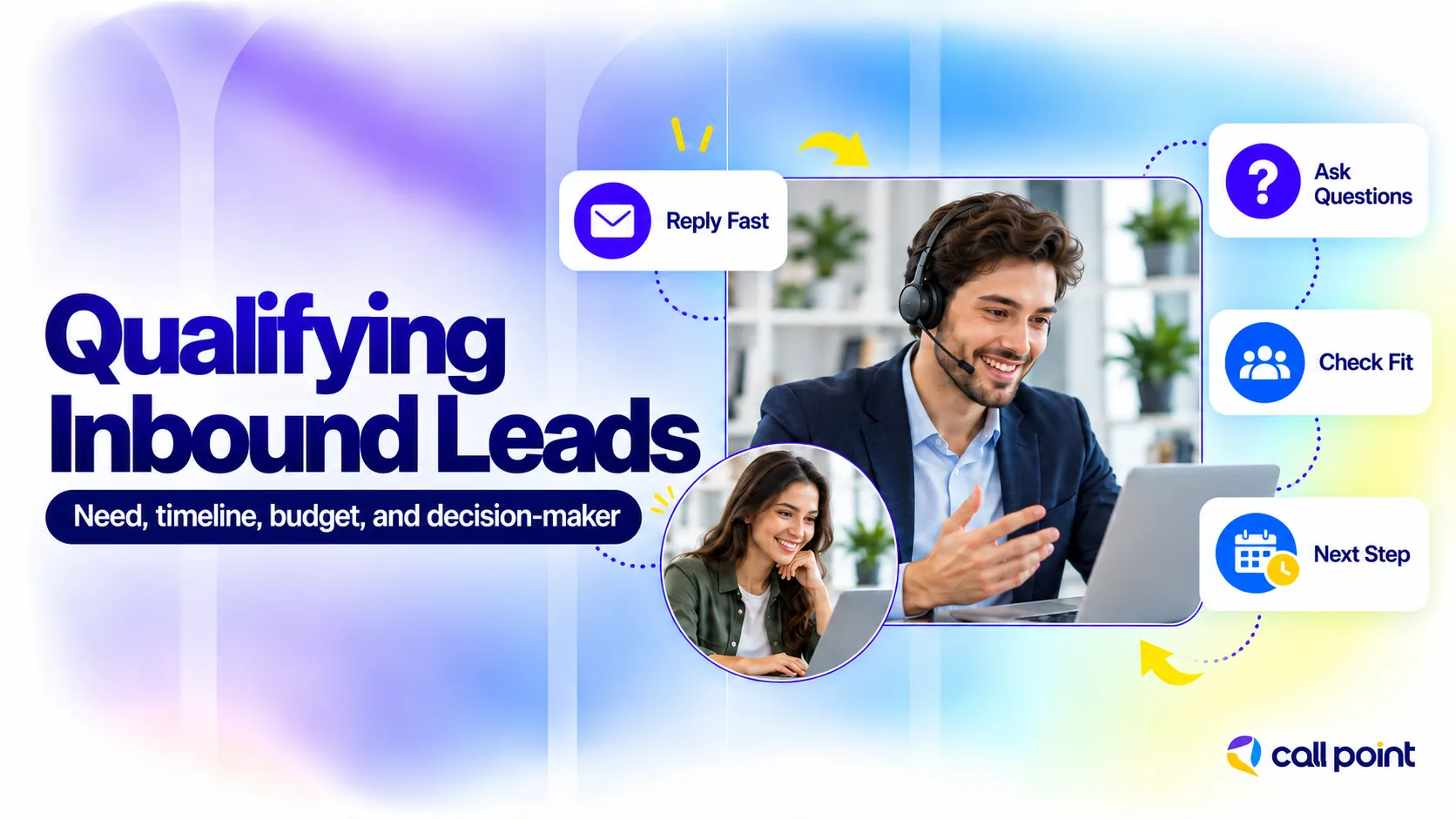
When someone contacts your business, they expect a response that relates to their question. An automated email confirming that their message was received is useful, but it doesn’t replace an actual answer.
For example, if a business owner requests pricing for outsourced customer support, sending a general company brochure isn’t particularly helpful. The sales team should respond to the request, ask for the information needed to prepare a quote, and explain what happens next.
A clear process makes incoming leads easier to manage.
- Record the inquiry. Save the customer’s contact details, original message, inquiry date, and where they found your business.
- Check what they’re asking for. Separate sales inquiries from customer support requests, spam, and unrelated messages.
- Assign the right person. Make sure someone is responsible for responding and following up.
- Respond to the actual question. Use the information the prospect has already provided instead of asking them to repeat everything.
- Check whether the lead is suitable. Understand their needs, timing, and whether your business can provide what they’re looking for.
- Agree on the next step. That could mean arranging a call, preparing a quote, booking an appointment, or following up later.
What Information Should You Collect When Qualifying a Lead?
You don’t need to ask every prospect a long list of questions. Focus on the details that help you decide whether the inquiry is worth progressing. For most B2B services, that means understanding the product or service required, the customer’s location, the problem they want to solve, their expected timeline, and who’s involved in approving the purchase. Budget is also useful to discuss, particularly when the proposed service requires a significant commitment. Gather information naturally during the conversation rather than making the prospect feel like they’re completing a questionnaire.
Response time also deserves attention.
Someone using live chat generally expects an answer during the conversation. A business requesting a detailed proposal understands that the team will need time to review its requirements.
Set realistic response expectations for each channel and make sure staff know who’s responsible for following up.
If you serve customers across the United States, consider time zone differences and after-hours inquiries. A prospect contacting your business after your team’s working hours should know when to expect a response.
Inbound Sales Examples: B2B and B2C
Inbound sales looks different depending on what your business sells and who your customers are. A company selling business services often needs several conversations before preparing a proposal. A consumer business might only need to answer a few questions and arrange an appointment.
The following examples show how each situation could work.
B2B Example: A Commercial Cleaning Quote Request
A facility manager contacts a commercial cleaning company through its website. They need cleaning services for an office building and want to know the cost. The sales representative asks about the building’s location, approximate size, cleaning frequency, current arrangements, and preferred start date. After confirming that the company services the area, the representative schedules a site inspection. The cleaning manager then reviews the property and prepares a proposal. Before accepting, the customer asks whether carpet cleaning is included in the quoted price. The salesperson checks the proposed scope and gives a clear answer. This process helps both sides understand the work before entering an agreement.
B2C Example: A Residential Solar Inquiry
A homeowner contacts a solar installation company after receiving a recommendation from a friend. They want to know whether solar panels would suit their property and how much installation could cost. The person handling the inquiry checks the address, confirms that the company works in that area, and asks a few basic questions about the homeowner’s requirements. They then arrange a consultation with a qualified solar adviser who can assess the property and provide technical recommendations. The initial sales-support work helps organize the inquiry without asking the intake representative to make technical decisions outside their responsibilities.
What Are the Benefits and Limitations of Inbound Sales?
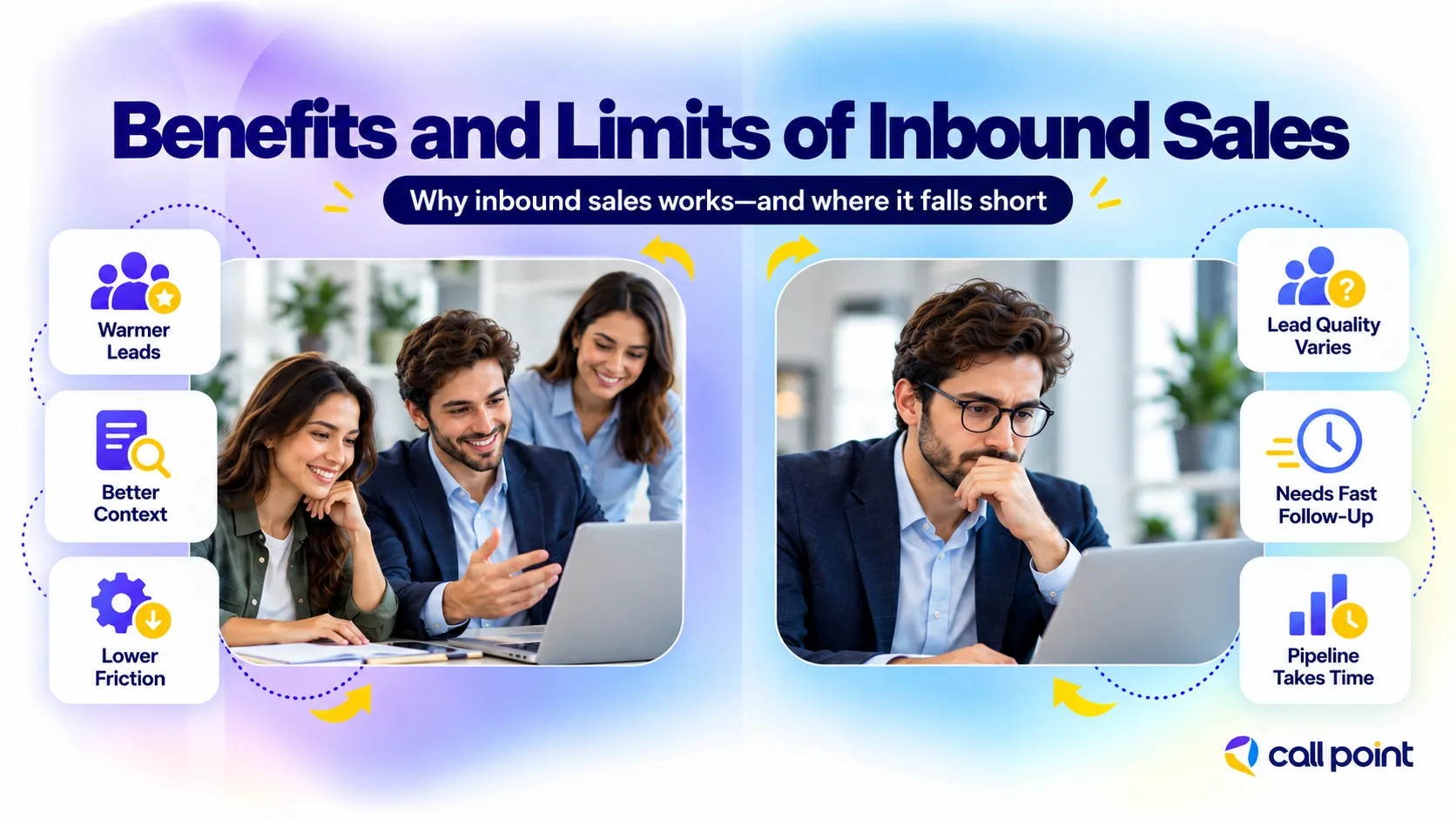
One of the main advantages of inbound sales is that you’re speaking with someone who has already taken an interest in your business.
You don’t need to begin by explaining why you’re contacting them. Instead, you can focus on what they’re looking for and whether your business can help.
Some practical benefits include:
- More relevant sales conversations: You can discuss a customer’s specific question instead of beginning with a general sales pitch.
- Better understanding of customer needs: The sales team can use information from inquiries and discovery conversations to recommend suitable services.
- Useful information about customer demand: Common questions, objections, and reasons for declining can help you understand what customers want.
There are disadvantages to consider as well.
Inbound sales depend on people finding your business and deciding to contact you. Generating that interest often requires investment in search visibility, advertising, referrals, and marketing.
Inquiry numbers can also change throughout the year. And not everyone who fills out a form is a suitable customer.
Your team might receive messages from people outside your service area, businesses with requirements you can’t meet, or prospects who are only collecting information. There’s also the question of capacity. Getting more inquiries won’t help much if your team already struggles to answer the ones coming in.
For inbound sales to work well, businesses need both a way to attract interested prospects and a reliable process for handling those conversations.
Common Inbound Sales Mistakes and How to Fix Them
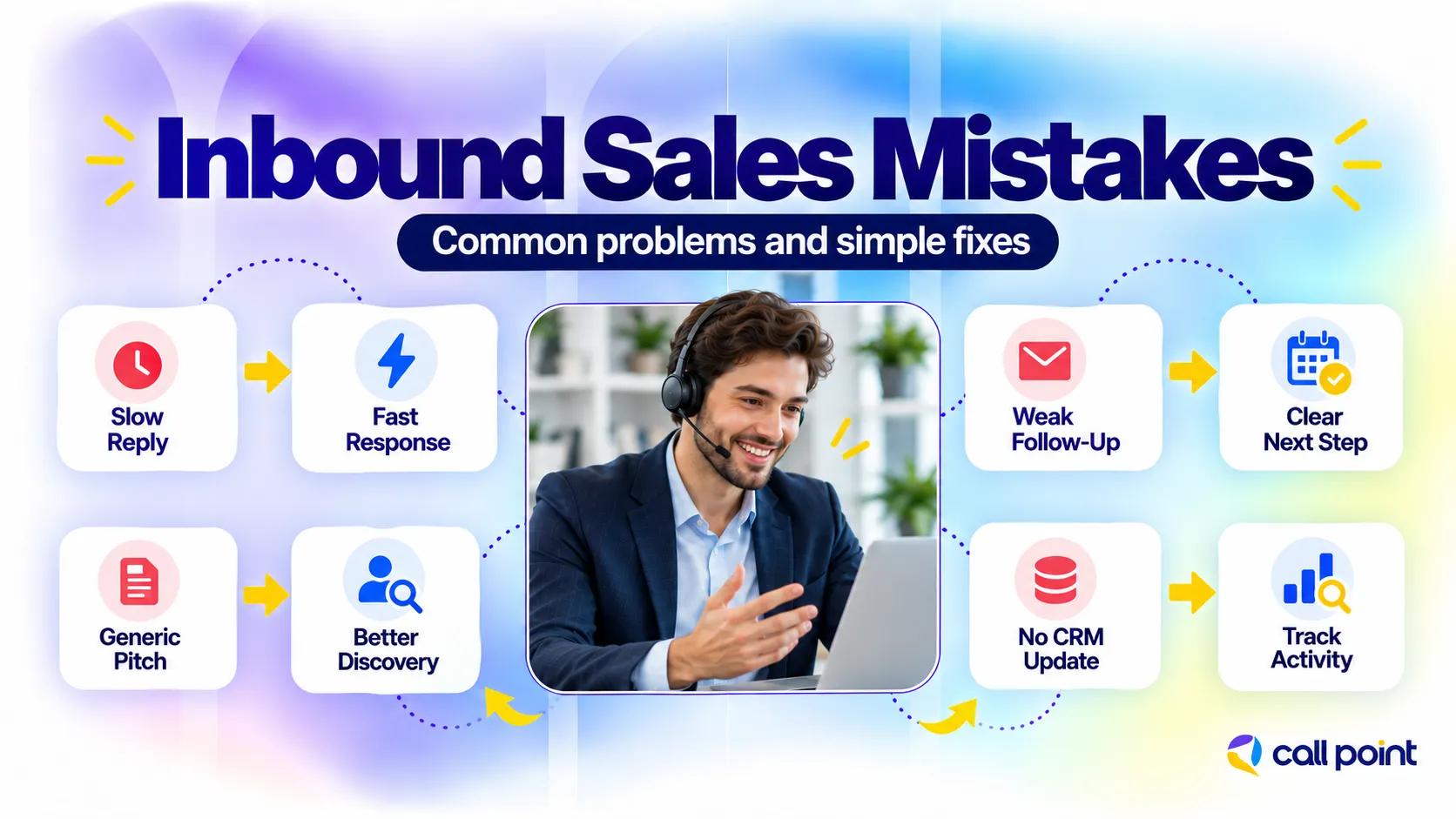
Most inbound sales problems come from how inquiries are handled rather than the number of leads a business receives. An interested customer might wait too long for a response. Another might speak to several team members and have to explain the same requirements each time.
These problems are avoidable when the team follows a clear process.
- Treating every lead as ready to buy: Check what the person wants and where they are in the buying process before arranging a sales meeting.
- Sending the same response to everyone: Read the original inquiry and answer the customer’s actual question.
- Leaving leads in a shared inbox: Assign responsibility to one person so the inquiry doesn’t get overlooked.
- Passing incomplete information to sales: Record relevant details about the customer’s needs, timing, and next steps.
- Focusing only on booked appointments: Check whether meetings actually take place and whether the prospects are suitable.
- Following up without a clear purpose: Agree on the next action and when it should happen. Respect the customer’s communication preferences.
You don’t need a complicated system to address these issues. Start with clear responsibilities, accurate records, and a consistent way to follow up. As inquiry volume grows, a customer relationship management (CRM) system can help keep conversations and sales activities organized.
Can You Outsource Inbound Sales Support?
Yes. Businesses can outsource parts of their inbound sales process to an external team. This is particularly useful when incoming calls, messages, and follow-up tasks take more time than the internal sales team can comfortably manage.
For example, a company might receive inquiries throughout the day but only have two sales representatives available to handle them. Those representatives still need time for consultations, proposals, and customer meetings.
An outsourced team can handle agreed administrative and initial sales-support activities so the internal representatives can focus on conversations that require their expertise.
Common outsourced tasks include:
- Answering incoming sales inquiries
- Collecting customer and lead information
- Asking initial qualification questions
- Booking appointments and confirming attendance
- Following up using approved messages
- Updating CRM records
- Preparing basic sales activity reports
Before outsourcing, decide which responsibilities the external team will handle and which will remain with your employees.
For instance, a support representative can collect requirements and schedule a consultation. But technical advice, special pricing, contract negotiations, and final sales decisions should remain with authorized staff unless you’ve specifically agreed otherwise.
How Call Point Supports Inbound Sales Work
Handling incoming inquiries takes time, especially when your team is also responsible for consultations, preparing proposals, and managing existing customers.
Call Point Business Solutions supports businesses with inbound calling, lead generation, appointment setting, and sales follow-up. Through our telemarketing and telesales services, we help businesses organize incoming inquiries, collect relevant information, and pass suitable opportunities to the right people.
The work is arranged around your business requirements.
For example, if your company receives customer inquiries through phone calls and website forms, we can help manage agreed parts of that process. This includes recording customer details, asking approved qualification questions, arranging appointments, and updating your CRM.
Your internal sales team can then focus on discussions that require product knowledge, technical advice, pricing approval, or contract decisions. We also use agent monitoring, call and task reviews, supervisor checks, performance tracking, client feedback, and coaching as part of our quality-control process. The goal is to keep the agreed work organized and make sure your team receives the information it needs to continue conversations with potential customers.
Frequently Asked Questions
Is Inbound Sales Cold Calling?
No. Inbound sales begin with interest shown by a potential customer, while cold calling involves contacting someone who hasn’t requested a sales conversation. For example, calling someone back after they submit a quote request is inbound sales follow-up. Calling a business from a prospect list to introduce your service is outbound sales. The contact method alone doesn’t determine the difference; what matters is how the conversation started. Businesses should also respect contact preferences and applicable communication rules.
Is Inbound or Outbound Sales Better?
That depends on how your customers buy and how your business finds new opportunities. Inbound sales works well when people already discover your business through search engines, referrals, advertising, or other sources and contact you for information. Outbound sales is useful when you want to reach specific companies or customer groups that haven’t approached you. Many businesses combine both approaches. Compare the cost, lead quality, staff time, and completed sales before deciding where to invest more effort.
Can Inbound Sales Work Without a Large Content Library?
Yes. Customers don’t need to read several blog posts before contacting a business. They also discover services through recommendations, Google Business Profiles, advertising, direct searches, and industry connections. A website with clear service information, straightforward pricing explanations where appropriate, and an easy way to get in touch can support inbound sales. Helpful content can bring in additional inquiries, but publishing more articles doesn’t automatically mean better leads.
What Happens When an Inbound Lead Is Not Ready to Buy?
You don’t need to push every interested prospect towards an immediate purchase. Find out why they aren’t ready and whether they’d like you to contact them later. For example, a business might be interested in outsourcing customer support but need budget approval before moving forward. The salesperson can record that information, provide the details needed for internal review, and arrange an appropriate follow-up. If the customer doesn’t want further contact, respect that decision.
Does Every Inbound Lead Need a Sales Call?
No. Some inquiries can be answered through email, live chat, or information already available on your website. A customer asking about a standard service price might only need a straightforward answer. More complicated requests, such as outsourcing an entire customer support operation, usually need a proper discussion about requirements, coverage, responsibilities, and costs. Choose the next step based on what the customer actually needs rather than trying to book a call with everyone.
Get Help Managing Your Inbound Sales Inquiries
If your team struggles to keep up with incoming calls, lead qualification, appointment setting, or sales follow-up, Call Point Business Solutions can help. We provide outsourced sales-support services based on your inquiry volume, business hours, and the tasks you need covered.
Contact Call Point Business Solutions to discuss your inbound sales requirements and how our virtual assistant team can support your existing sales process.